
A Detaching Moonroof Panel Is More Than an Inconvenience for Texas Drivers
Key Takeaways: Subaru has recalled roughly 69,600 model-year 2026 Forester and Forester Hybrid vehicles because the moonroof’s sliding glass panel may have been improperly bonded and could detach while driving. The campaign is identified as Subaru recall WRF-26 and NHTSA recall 26V346. Dealers will inspect the panel and replace the assembly if needed at no cost. Owner letters were scheduled for July 2026, but running your VIN through the federal recall lookup tool is the most reliable confirmation. For Texas owners, the recall may intersect with post-sale duty-to-warn principles, the Texas Deceptive Trade Practices Act, and dealer warranty provisions. A single successful recall repair generally does not make a vehicle a lemon, because the Texas Lemon Law requires statutory thresholds such as repeated unsuccessful repairs or 30 or more cumulative days out of service. Keep every repair order, loaner agreement, and written communication to preserve your options.
If you own a 2026 Subaru Forester or Forester Hybrid, the moonroof recall means your vehicle may have a glass panel that was improperly bonded at the factory and could separate while driving. The campaign covers roughly 69,600 vehicles nationwide. For Texas owners, this means a free dealer inspection, possible assembly replacement, and consumer rights that may extend beyond the repair itself.
If your Forester has been in the shop repeatedly or the recall repair has not resolved the problem, the attorneys at Jeffries Law are available to review your repair history. Call 877-454-6045 or contact us now to discuss your options under Texas law.
What the Subaru Moonroof Recall 2026 Campaign Actually Covers
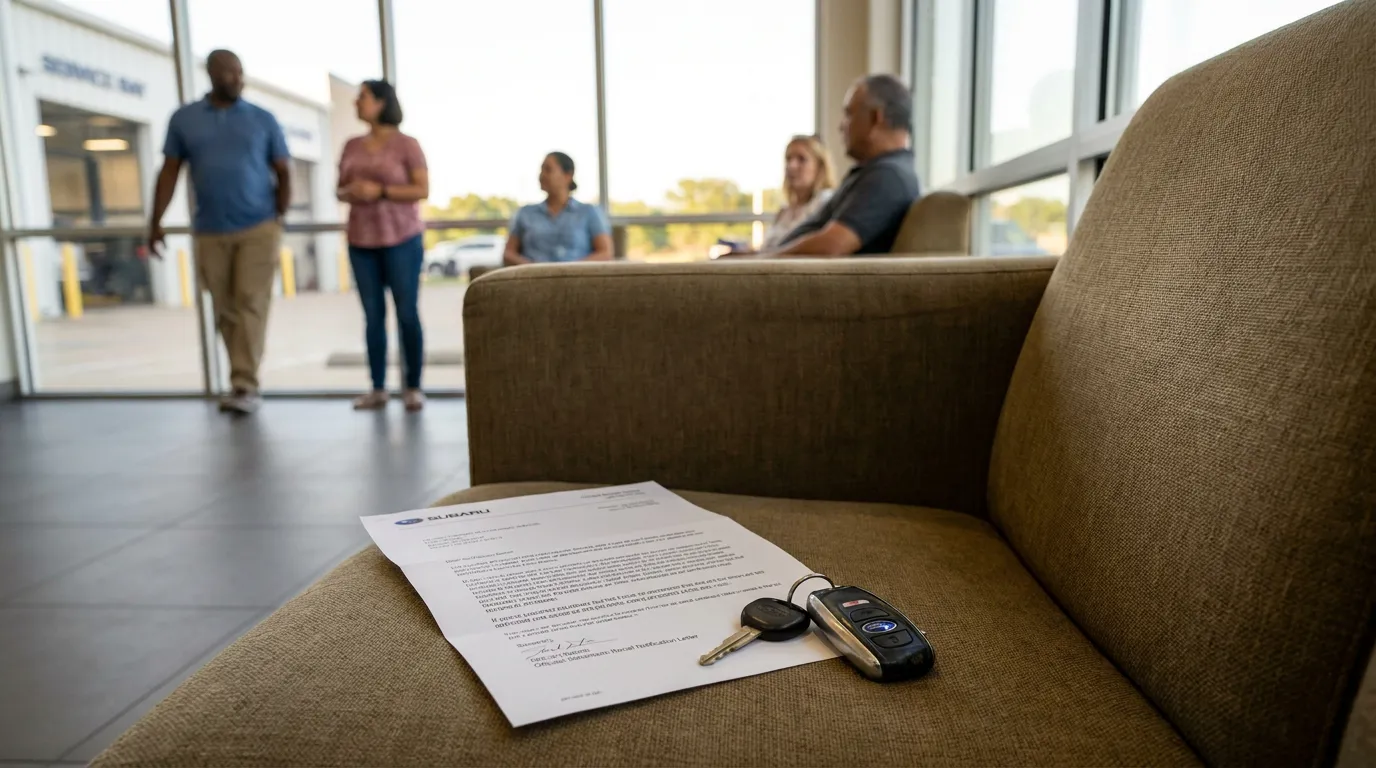
The recall applies to certain model-year 2026 Forester and Forester Hybrid vehicles built with a moonroof assembly that may not have been properly adhered. Subaru assigned internal recall number WRF-26, and the NHTSA campaign number is 26V346. A detached panel can fall onto the roadway, creating a hazard for occupants and other motorists.
Dealers will inspect the moonroof glass panel and replace the assembly if necessary, at no charge. Owner notification letters were scheduled for July 2026, and Subaru’s customer service line is 1-844-373-6614. Any authorized Texas Subaru dealer should perform recall work without charge.
Confirming Whether Your VIN Is Included
Do not rely solely on whether a letter arrived. Vehicle identification numbers became searchable through the federal recall lookup tool beginning May 29, 2026, so entering your 17-digit VIN is the most reliable confirmation. Letters can be delayed, misaddressed, or sent to a prior owner.
Check for other open campaigns on the same VIN. Federal recall data for the 2026 Forester lists additional actions, including a rear hatch support bracket recall.
\u{1F4A1} Pro Tip: Ask the service advisor to note the recall number on your repair order and request a printed copy before you leave. That document becomes part of the written record if the same component causes trouble again.
Why Manufacturer Recall Obligations Do Not End at the Sale
A manufacturer’s responsibility for a product may continue after the vehicle leaves the lot. Under federal motor vehicle safety law, a manufacturer that determines a safety-related defect exists must notify owners and remedy the defect without charge. Many states also recognize post-sale duty to warn as common law.
How that warning is delivered can matter. Warnings buried in an owner’s manual may be legally insufficient if the likely user would not encounter them. In some circumstances a warning may need to appear on the product itself. Whether any particular notice was adequate is evaluated case by case.
Failure to Warn Is a Separate Theory From a Physical Defect
A marketing or warning defect claim generally does not require proof of a manufacturing flaw in your specific vehicle. In a failure to warn claim, the allegation is that the manufacturer did not provide adequate warnings about safe use, and the user suffered harm from the undisclosed risk. Recoverable damages can include medical costs, lost income, and pain and suffering, though causation must be proven.
Actual knowledge of the hazard is generally not required in every case. Depending on the theory pleaded, liability may attach for risks a manufacturer reasonably should have discovered through adequate testing.
Where Texas Consumer Protection Law Fits In
Texas law may give vehicle owners a statutory route when a seller or manufacturer conceals or misrepresents a known defect. The Deceptive Trade Practices Act, at Tex. Bus. & Com. Code § 17.46(a), declares that false, misleading, or deceptive acts in trade or commerce are unlawful. A private DTPA claim requires the claimant to qualify as a "consumer," show reliance for misrepresentation and failure-to-disclose claims, send written pre-suit notice, and ordinarily sue within two years. Failure to disclose a known defect is actionable only where the concealment was intended to induce the transaction.
The DTPA draws a line around heightened culpability. Tex. Bus. & Com. Code § 17.45(13) defines "intentionally" as actual awareness of the falsity, deception, or unfairness of the act or practice (or the condition, defect, or failure constituting a breach of warranty), coupled with the specific intent that the consumer act in detrimental reliance on the falsity or deception, or in detrimental ignorance of the unfairness. That showing can expand damages but is demanding and rarely provable without documentary evidence.
Owners who believe a defect was concealed may find the full text of the Texas Deceptive Trade Practices Act useful background reading.
Recalls Can Surface at Inspection Time
An unrepaired recall may show up during vehicle inspection in covered Texas counties. Tex. Health & Safety Code § 382.202(d-1) permits the commission to adopt rules for including on an inspection report a notification regarding whether the vehicle is subject to a safety recall for which repairs have not been made. An open recall does not by itself cause inspection failure, but the paperwork may serve as a dated record.
Who Pays for Recall Work in the Texas Supply Chain
The cost of authorized recall repairs generally falls on the manufacturer rather than the owner or dealership. Federal law requires the manufacturer to remedy a safety recall free of charge. Separately, Tex. Bus. & Com. Code § 57.256 provides that repair work performed at a supplier’s request, including work under a product improvement program, constitutes a warranty claim for which the dealer must be paid.
| Situation | What Generally Happens | What to Document |
|---|---|---|
| Recall inspection only | Dealer checks panel adhesion, no parts replaced | Repair order showing inspection date and finding |
| Panel assembly replaced | Assembly swapped at no cost under WRF-26 | Parts listed, dates in and out of service |
| Repeat moonroof problems after repair | Additional warranty visits generated | Every repair order, plus loaner and rental records |
| Vehicle held for parts | Days out of service accumulate | Written confirmation of pickup and drop-off dates |
When a Recall Repair Starts Looking Like a Lemon Law Issue
A single successful recall repair generally does not turn a vehicle into a lemon. The Texas Lemon Law, found at Tex. Occ. Code § 2301.605, presumes a reasonable number of repair attempts when the same substantially impairing defect has been subject to repair four or more times within the first 24 months or 24,000 miles following original delivery, when a serious safety hazard persists after two attempts, or when the vehicle has been out of service for repair for a cumulative 30 or more days, generally within the first 24 months or 24,000 miles. If your Forester returns for the moonroof more than once, or sits at the dealership waiting on parts for an extended period, the analysis may change.
Days out of service are counted carefully, and time in a comparable loaner may not count. Reviewing how the 30-day out-of-service test works in Texas can help you understand whether your repair timeline may be approaching a threshold that matters.
Building a Record That Holds Up
Dealer and manufacturer repair orders are typically the primary evidence in a warranty or lemon law claim. Ask for a copy at every visit, even for inspections only.
Practical items worth collecting include:
- Every repair order, including ones showing "no problem found"
- Dates the vehicle was dropped off and returned to you
- Loaner car or rental agreements
- Written correspondence with Subaru customer service, including case numbers
- Your recall notification letter and VIN lookup printouts
\u{1F4A1} Pro Tip: If parts are backordered, ask for that statement in writing on the repair order rather than by phone. Parts delays often drive the day count that matters most later.
Frequently Asked Questions
1. Does the moonroof recall repair cost me anything as a Texas owner?
Generally, no. Dealers are directed to inspect the moonroof and replace the assembly if necessary at no charge under recall WRF-26. If a dealership attempts to bill you, ask for the reason in writing and contact Subaru customer service at 1-844-373-6614.
2. What if I never received a Subaru recall notice in the mail?
Letters were scheduled for July 2026, but delivery is not guaranteed. Running your VIN through the federal lookup tool is the most reliable confirmation, since VINs became searchable on May 29, 2026.
3. Can a recall alone qualify my Forester under the Texas Lemon Law?
Generally not. There is no set number of recalls that makes a vehicle a lemon; Texas claims usually depend on meeting statutory tests, such as repeated unsuccessful repairs for a substantially impairing defect or 30 or more cumulative days out of service.
4. What happens if the moonroof adhesive defect causes a crash or injury?
That scenario may implicate products liability theories in addition to warranty law, including failure to warn. Whether any particular claim is viable depends on causation, the adequacy of the warning provided, applicable defenses, and the evidence.
5. Should I keep driving my Forester before the inspection?
Subaru’s recall notice did not direct owners to stop driving affected vehicles, but that remains a judgment call. Because a detaching panel can create a road hazard, many owners schedule the inspection promptly.
Protecting Your Position While the Recall Plays Out
The 2026 Subaru Forester moonroof recall generally obligates the manufacturer to fix the bonding problem at no cost, and many owners may have the work completed in a single visit. Complications arise when the repair does not hold, when parts delays stretch into weeks, or when the same component keeps generating warranty visits. Texas consumer protection statutes, dealer warranty provisions, and lemon law standards each address different pieces of that picture, and which one applies depends on the facts documented in your repair orders.
If your Forester has returned to the service department more than once or has spent substantial time out of service, Jeffries Law can review your records and explain what recall repair rights may apply. Reach a vehicle defect attorney by calling 877-454-6045 today.
Disclaimer: This content is for informational purposes only and is not legal advice. Every case is unique, and results may vary. Consult an attorney about your specific circumstances.