
When Your Car’s Driver-Assist Technology Keeps Failing
Key Takeaways: An adaptive cruise control problem can make your vehicle a lemon under Texas law if the defect substantially impairs its use, market value, or safety and the manufacturer still has not fixed it after a reasonable number of repair attempts. Symptoms like phantom braking, failure to detect stopped vehicles, or sudden shutoffs at highway speed are most likely to support a claim when they keep coming back. Dealer repair orders are often the main evidence, so make sure each visit records your complaint and the work done. Texas Occupations Code § 2301.605 sets presumptions based on repair attempts or 30 or more days out of service within 24 months or 24,000 miles. To rely on these presumptions, you must also send written notice to the manufacturer and give it a chance to fix the defect. Deadlines matter: you generally must file a DMV complaint within six months of the earliest qualifying date, while warranty lawsuits generally have a four-year limit. Arbitration through BBB National Programs is another option.
An adaptive cruise control problem may make your vehicle a lemon under Texas law, depending on how serious the defect is and how the manufacturer has handled repairs. Adaptive cruise control (ACC) uses radar, cameras, and software to keep a set distance from the car ahead. When it brakes for no reason, fails to see a stopped vehicle, or shuts off at highway speed, the problem is more than an annoyance. A recurring ACC defect could qualify if the warranty covers it, it substantially impairs the vehicle’s use, market value, or safety, and the manufacturer still has not fixed it after a reasonable number of repair attempts.
If your new or nearly new vehicle keeps going back to the dealer for the same driver-assist failure, an adaptive cruise control problem lawyer at Jeffries Law can review your repair orders and explain your options. Call 877-454-6045 or contact us now to discuss your situation.
How the Texas Lemon Law Treats Defective Safety Technology
The Texas Lemon Law, found in Texas Occupations Code Chapter 2301, Subchapter M, covers new vehicles with warranty-covered defects the manufacturer cannot fix. The statute does not list specific parts such as ACC. It asks whether a defect, called a “nonconformity,” substantially impairs the vehicle’s use, market value, or safety. Electronic driver-assist systems can meet that standard when they fail in ways that matter to the driver.
Texas takes safety-related failures especially seriously. The statute gives special treatment to a “serious safety hazard,” defined as a life-threatening malfunction or nonconformity that substantially impedes a person’s ability to control or operate the vehicle for ordinary use, or that creates a substantial risk of fire or explosion. An ACC system that brakes hard in traffic for no reason, or speeds up toward a slower vehicle, may meet this definition. The Texas DMV and courts look at the specific facts, so no single symptom qualifies automatically.
Who Is Responsible for Fixing the Defect?
Under the Texas Lemon Law, the manufacturer, not the dealership, is generally responsible. Texas Transportation Code § 503.001 defines a “manufacturer” as a person who manufactures, distributes, or assembles new vehicles. The dealer usually performs warranty repairs, but owners typically bring lemon law claims against the manufacturer or distributor.
Signs Your Adaptive Cruise Control Problem May Qualify
An adaptive cruise control problem is more likely to support a claim when it keeps coming back and affects how safely you can drive. A single glitch that a software update fixes for good usually will not qualify. A pattern of failures recorded across several dealer visits is different. Common ACC complaints include:
-
Sudden “phantom braking” with no vehicle or obstacle ahead
-
Failure to detect stopped or slowing vehicles
-
The system shutting off without warning at highway speeds
-
Repeated radar or camera sensor error warnings
-
Uneven following distance or unintended acceleration
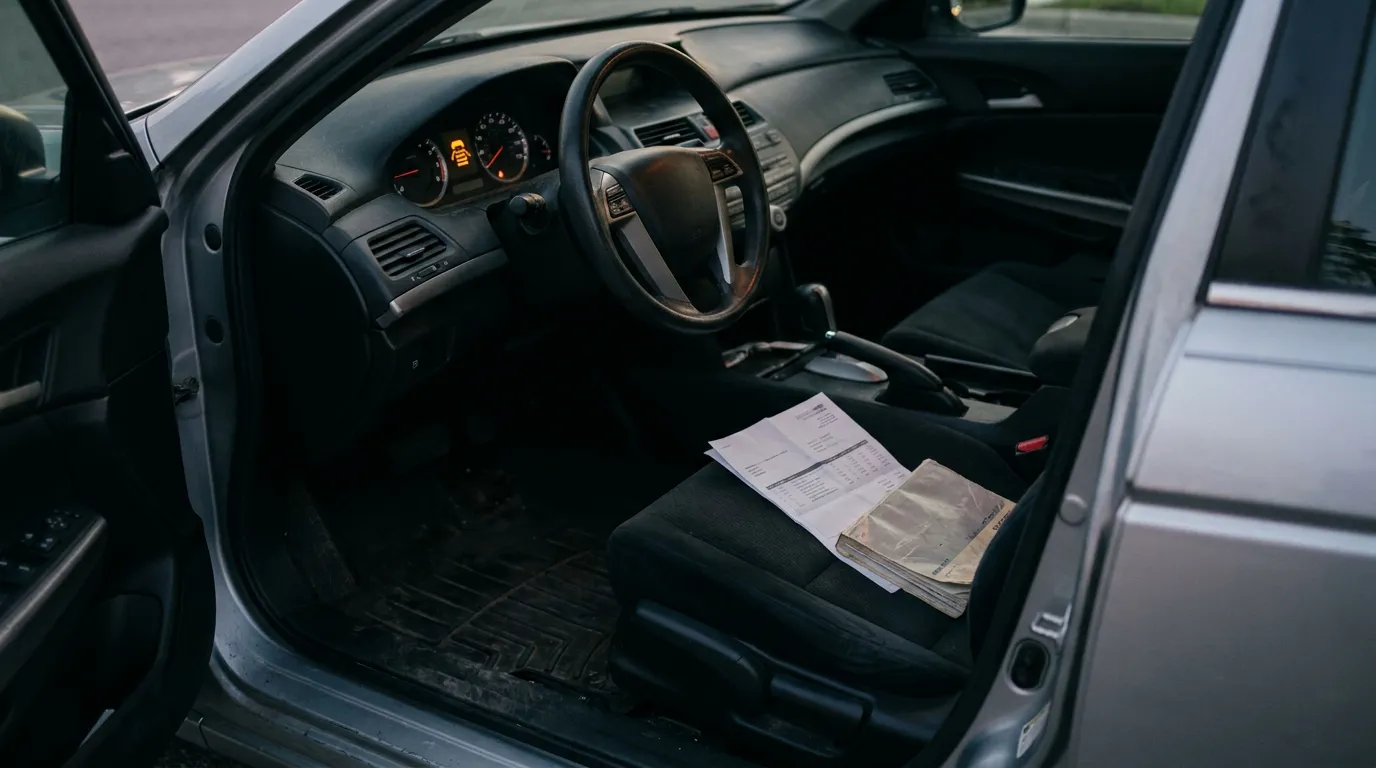
Make sure the dealer records each symptom on a repair order every time you bring the car in. Repair orders are often the main evidence in a lemon law claim. Your own notes, dashcam clips, and photos of warning messages can add context, but they mostly back up the official records.
💡 Pro Tip: When you drop off your vehicle, describe the ACC symptom clearly and ask the service advisor to write your complaint on the repair order. Before you leave, check that the final invoice lists the problem you reported.
Repair Attempts, Days Out of Service, and the Lemon Law Presumption
Before a lemon law claim can succeed, Texas generally requires that the manufacturer has had a reasonable number of attempts to fix the defect. Texas Occupations Code § 2301.605 sets out presumptions that help define “reasonable.” These generally apply within the first 24 months or 24,000 miles after delivery, whichever comes first.
|
Presumption Category |
General Requirement Under Tex. Occ. Code § 2301.605 |
|---|---|
|
Standard nonconformity |
Four or more repair attempts for the same nonconformity: two attempts within the first 12 months or 12,000 miles, plus two more attempts within 12 months or 12,000 miles following the second attempt (all occurring before warranty expiration). |
|
Serious safety hazard |
Two or more repair attempts for the same nonconformity, all made before the earlier of the warranty’s expiration date or 24 months or 24,000 miles after original delivery |
|
Days out of service |
30 or more total days in the shop for repairs, with the attempts made before the earlier of the warranty’s expiration date or 24 months or 24,000 miles after original delivery (days when the manufacturer or dealer provided a comparable loaner vehicle generally do not count) |
These presumptions are not the only path to relief, and they do not guarantee a win. The manufacturer may argue the defect does not substantially impair the vehicle, or that abuse, neglect, or an unauthorized modification caused the problem.
The Role of Written Notice
Before the presumptions apply, Texas requires that the manufacturer receive written notice of the defect and a chance to fix it. Dealer repair visits alone do not meet this requirement. Sending notice directly to the manufacturer, at the address listed in your warranty or owner’s manual, can help protect your claim.
Deadlines That Can Affect Your Lemon Car Claim
Timing matters a great deal in a Texas lemon car case, and several deadlines may apply at once. You generally must file a Texas Lemon Law complaint with the Texas Department of Motor Vehicles within six months after the earliest of three events: the warranty expires, 24 months pass from delivery, or the odometer reaches 24,000 miles (Tex. Occ. Code § 2301.606). This DMV deadline is separate from lawsuit deadlines.
Warranty Lawsuits Under the Texas Business and Commerce Code
You generally must file a lawsuit for breach of warranty within four years after the claim arises. Under the Texas UCC limitations rule, Texas Business and Commerce Code § 2.725(a), the parties may shorten that period by contract to as little as one year, but they cannot extend it. Check your purchase paperwork for a shorter deadline.
The four-year clock usually starts when you take delivery of the vehicle, even if you did not yet know about the defect. Section 2.725(b) makes an exception when a warranty explicitly covers future performance and you could not discover the breach until that performance. Courts generally read this exception narrowly, so it may not help in every ACC case.
Resolving an ACC Defect Through Arbitration
Many Texas consumers resolve disputes with manufacturers through the arbitration program run by BBB National Programs. The BBB Autoline Texas program works with participating manufacturers to resolve lemon law disputes. Its eligibility rules use the same “substantially impairs the use, market value, or safety” standard and require that the manufacturer had a reasonable number of attempts to fix the problem.
Arbitration and the Texas DMV complaint process are separate from a lawsuit. Each has its own rules, deadlines, and effects on your other rights. Some warranties require you to try a specific dispute program before suing, so read your warranty terms carefully.
💡 Pro Tip: Keep a single folder, paper or digital, with your purchase contract, warranty booklet, every repair order, and copies of any letters to the manufacturer.
Frequently Asked Questions
1. Does a software update count as a repair attempt?
In many cases, yes. A dealer visit where a technician works on the ACC complaint, including a software reflash, may count as a repair attempt. What often matters is whether the repair order records your complaint and the work done.
2. What if the dealer says it “could not duplicate” the problem?
A “could not duplicate” note may still show that you reported the defect, though manufacturers may argue that visit was not a true repair attempt. ACC failures often come and go, so describing conditions in detail, such as speed, weather, and traffic, can help technicians recreate the problem.
3. Does the Texas Lemon Law cover leased vehicles?
Yes, generally. The Texas Lemon Law covers new vehicles under the manufacturer’s warranty, and people who lease can generally bring claims too. Coverage depends on the facts of the deal.
4. Can I still pursue a claim if my vehicle is past 24,000 miles?
Possibly. The presumptions are tied to the first 24 months or 24,000 miles, but the DMV filing window stays open for six months after the earliest qualifying date. Warranty claims under Texas Business and Commerce Code § 2.725 follow different timelines, so you may still have other options.
Protecting Your Rights When Driver-Assist Technology Fails
A recurring ACC defect may make a new vehicle a lemon car under Texas law when it substantially impairs use, value, or safety and the manufacturer cannot fix it after a reasonable number of attempts. Your strongest evidence is often a steady record of dealer repair orders, backed by timely written notice to the manufacturer. Watch your deadlines, because the DMV complaint window and the lawsuit deadline follow different rules.
If your vehicle keeps going back to the shop for the same driver-assist failure, Jeffries Law can review your repair history and explain what qualifies as a serious safety hazard in Texas. Call 877-454-6045 today or schedule your case review to take the next step.
Disclaimer: This content is for informational purposes only and is not legal advice. Every case is unique, and results may vary. Consult an attorney about your specific circumstances.