
When a Vehicle Defect Becomes a Danger
Key Takeaways: Under the Texas Lemon Law, a serious safety hazard is a life-threatening malfunction that substantially impedes your ability to control or operate the vehicle, or creates a substantial risk of fire or explosion. This matters because qualifying vehicles may be presumed a “lemon” after just two unsuccessful repair attempts within specific timeframes, rather than the four generally required. Qualifying defects include sudden loss of engine power, steering or brake failures, and electrical or fuel-system problems that risk fire. Documentation on each repair order is essential. Texas requires written notice, a final repair opportunity, and a timely TxDMV complaint filed within six months of the earliest applicable deadline. Successful claims typically result in a comparable replacement vehicle or repurchase, less a reasonable allowance for use.
A serious safety hazard under the Texas Lemon Law is a life-threatening malfunction or nonconformity that either substantially impedes your ability to control or operate your vehicle for ordinary use, or that creates a substantial risk of fire or explosion. This definition matters because it can shorten the road to relief for owners of newer vehicles. When a defect rises to this level, Texas law allows a qualifying vehicle to be presumed a “lemon” after fewer repair attempts than the standard route requires.
Knowing where your situation fits within the statute is the first step toward a possible buyback or replacement. The team at Jeffries Law provides you with a qualified Texas lemon law attorney that helps consumers document dangerous defects and pursue relief. Call us at 877-454-6045 or reach out through our confidential case review form to discuss your vehicle.
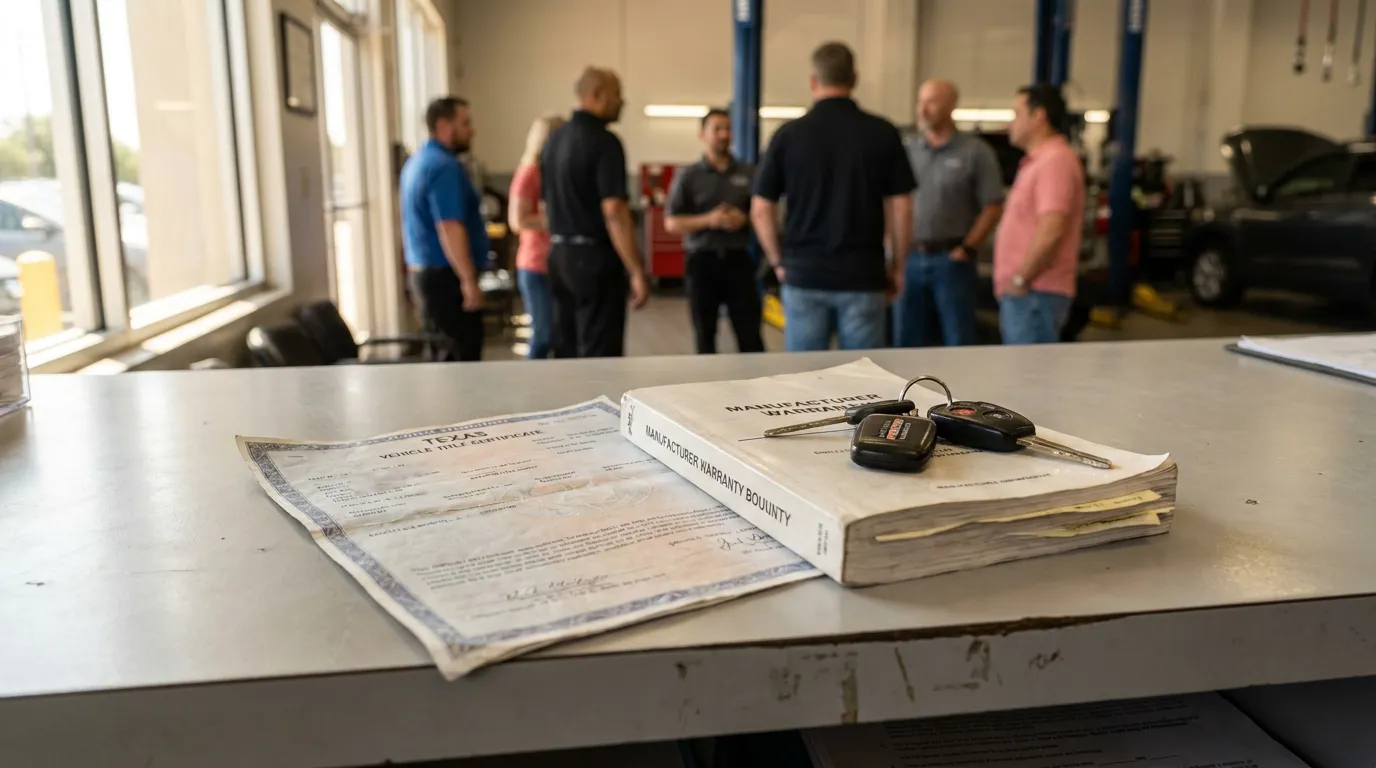
How the Texas Lemon Law Serious Safety Hazard Test Works
The texas lemon law serious safety hazard test is one of several presumption pathways built into the Texas Occupations Code § 2301.601 et seq. Ordinarily, a vehicle may be presumed a lemon after four documented repair attempts for the same defect within the first 24 months or 24,000 miles. The serious-safety-hazard route recognizes that some defects are too dangerous to allow repeated failed fixes. Two unsuccessful repair attempts can satisfy the serious-safety-hazard presumption, typically one attempt within the first 12 months or 12,000 miles after delivery and at least one more within 12 months or 12,000 miles immediately following that first repair, all within the overall 24-month or 24,000-mile coverage period.
This reduced threshold reflects a straightforward policy: dangerous defects deserve faster resolution. Consider a vehicle with sudden, intermittent loss of engine power. If that power loss substantially impedes your ability to control the vehicle or creates a life-threatening malfunction, two unsuccessful repair attempts may be enough to meet the test. Whether a particular defect qualifies is fact-dependent, and courts and hearings examiners evaluate the evidence narrowly, so careful documentation is essential.
A serious safety hazard sits inside the broader “non-conformity” framework. Under Texas law, a defect can qualify for relief if it creates a serious safety hazard or substantially impairs the vehicle’s use or market value. Identifying it early can shape your entire strategy. You can read more about how lemon protections keep drivers safe in this overview of how lemon laws protect you and safer roads.
Defining a Life-Threatening Malfunction Under Texas Law
Texas defines a serious safety hazard with specific statutory language that focuses on danger, not mere inconvenience. The definition centers on a life-threatening malfunction meeting one of two conditions. Not every annoying or costly problem will qualify. The Center for Auto Safety publishes the relevant Texas Lemon Law statutory text that consumers can review.
Substantial Impairment of Vehicle Control
The first branch covers defects that substantially impede a person’s ability to control or operate the vehicle for ordinary use or intended purposes. Examples include steering failures, brakes that do not respond consistently, or an engine that cuts out in traffic. These malfunctions can turn a routine drive into an emergency. Because the standard is “substantial” impairment, minor or occasional issues generally will not meet it.
Substantial Risk of Fire or Explosion
The second branch covers defects that create a substantial risk of fire or explosion. Electrical shorts, fuel-system leaks, and certain battery or wiring failures can fall into this category. A documented fire risk is one of the clearest examples of a life-threatening vehicle defect. The risk must be substantial and tied to a genuine nonconformity.
Common defects that consumers frequently raise as potential serious safety hazards include:
-
Sudden or intermittent loss of engine power while driving
-
Steering or suspension failures that affect control
-
Brake malfunctions that reduce stopping ability
-
Electrical or fuel-system problems that risk fire or explosion
💡 Pro Tip: Ask the service department to note the specific safety symptom on each repair order, not just a generic “no problem found.” Clear language describing the danger can strengthen a later qualification argument.
The Presumption Pathways: Comparing Qualification Routes
Texas offers more than one way to establish the presumption that a vehicle is a lemon. Each pathway operates within the same 24-month or 24,000-mile window, but the number of attempts or days differs. Choosing the right pathway depends on your repair history and the nature of the defect.
|
Qualification Route |
General Requirement |
Timing Window |
|---|---|---|
|
Four-times test |
Four documented repair attempts for the same defect |
Within 24 months / 24,000 miles |
|
Serious safety hazard test |
Two unsuccessful repair attempts for a life-threatening defect |
Within 24 months / 24,000 miles |
|
30-day out-of-service test |
Vehicle out of service roughly 30 days total |
Within 24 months / 24,000 miles |
One detail surprises many owners: comparable loaner days do not count toward the 30-day threshold. If your dealer provided a comparable loaner while your car sat for repairs, those loaner days generally are excluded from the 30-day total. This is a common reason claims fall short under the out-of-service route, making the serious-safety-hazard pathway the stronger option when the defect is genuinely dangerous.
Steps to Protect Your Claim and Your Right to a Buyback
Meeting the definition is only part of the process; Texas also requires specific procedural steps before relief is ordered. These steps involve notice, a final repair opportunity, and a formal complaint. Missing a step or deadline can jeopardize an otherwise strong claim.
Written Notice and a Final Repair Attempt
Before pursuing a claim, you generally must give the manufacturer written notice and at least one final opportunity to repair the defect. Sending that notice by certified mail creates a dated record. This step protects both you and the manufacturer and is often a prerequisite to relief. Keep copies of everything you send and receive.
Filing With the TxDMV
Texas Lemon Law complaints are filed with the Texas Department of Motor Vehicles seeking repurchase or replacement. This TxDMV lemon law process is administrative and separate from any court action. There is a firm deadline: a complaint generally must be filed within six months of the earliest of the warranty’s expiration, 24 months after purchase, or 24,000 miles. Courts and administrative bodies interpret these deadlines narrowly, so acting promptly is important.
When a serious safety hazard is established and statutory affirmative defenses do not apply, the remedy is defined by regulation. Under 43 Tex. Admin. Code § 224.260, when the hearings examiner finds the statutory conditions are met and affirmative defenses do not apply, the hearings examiner shall issue a final order to the manufacturer to replace the vehicle with a comparable motor vehicle, or to accept the return of the vehicle and refund the full purchase price, less a reasonable allowance for the owner’s use. You can review the full Texas administrative remedy rules to see the exact language. A vehicle repurchase in Texas typically includes a mileage-based offset for the use you got from the car.
Financed vehicles follow a specific refund rule worth knowing in advance. When a lienholder is involved, a refund is made to the owner and the lienholder in proportion to each party’s interest. This means part of your recovery may go toward satisfying the outstanding loan balance.
💡 Pro Tip: Save every repair order, loaner agreement, and communication with the dealer or manufacturer. A complete paper trail is often the single most useful asset in a Texas lemon law qualification effort.
Frequently Asked Questions
1. How many repair attempts does the serious safety hazard test require?
Two unsuccessful repair attempts can satisfy the serious-safety-hazard presumption, generally one within the first 12 months or 12,000 miles and another within 12 months or 12,000 miles after that first repair, inside the 24-month or 24,000-mile window. This is fewer than the four attempts generally required under the standard test.
2. Does intermittent engine power loss count as a serious safety hazard?
It can, when the power loss substantially impedes your ability to control the vehicle or creates a life-threatening malfunction. Because qualification is fact-specific, the way the symptom is documented on each repair order matters.
3. Do loaner car days count toward the 30-day out-of-service test?
No, days a comparable loaner vehicle is provided generally do not count toward the 30-day out-of-service threshold. This is a frequent reason an out-of-service claim falls short. The serious-safety-hazard route may be a stronger option when the defect is dangerous.
4. What deadline applies to a Texas Lemon Law complaint?
A complaint generally must be filed within six months of the earliest of the warranty’s expiration, 24 months after purchase, or 24,000 miles. These deadlines are interpreted narrowly and are not automatically extended.
5. What relief can I receive if my claim succeeds?
If a qualifying defect is established and defenses do not apply, the remedy is typically a comparable replacement vehicle or a repurchase. A repurchase refunds the purchase price less a reasonable allowance for your use. For a financed vehicle, the refund is split between you and the lienholder in proportion to each interest.
Moving Forward With Confidence
A serious safety hazard is a narrow but powerful category within the texas lemon law serious safety hazard test, and recognizing it early can meaningfully shape your path to relief. The defect must be a genuine life-threatening malfunction that impairs control or risks fire or explosion, documented across at least two failed repair attempts within the statutory window. Written notice, a final repair opportunity, and a timely TxDMV complaint set the stage for a possible replacement or vehicle repurchase in Texas.
If your newer vehicle keeps returning to the dealer for a dangerous defect, you do not have to sort out the texas lemon law serious safety hazard test alone. Learn more about your protections through this guide on safer roads and consumer rights, then call Jeffries Law at 877-454-6045 or start your review through our Texas lemon law contact page. Reaching out early can help you protect the records and deadlines that matter most.