
When Your New Car Shuts Down on the Road
Key Takeaways: A car that keeps stalling while driving can qualify as a lemon in North Carolina, but not automatically. The stalling generally has to substantially impair the vehicle’s use, market value, or safety. You must report it within the manufacturer’s express warranty period or 24 months/24,000 miles of original delivery, whichever comes first, and it must remain unfixed after a reasonable number of repair attempts. The law presumes a reasonable number of attempts if the same defect was taken in four or more times within that period, or if the vehicle was out of service for 20 or more business days in any 12-month period of the warranty. In most cases, you also need to send written notice directly to the manufacturer and give it up to 15 calendar days for a final repair. If your car qualifies, a buyer may generally choose between a replacement and a refund, minus a usage deduction. You generally must file a lawsuit within three years after your claim accrues, typically from when the manufacturer’s last reasonable opportunity to repair the defect has passed, under North Carolina’s general statute of limitations.
A car that keeps stalling while driving may qualify as a lemon under North Carolina law, but not automatically. Under the NC Lemon Law, a stalling defect may support a claim if it substantially impairs the vehicle’s value to you, you reported it within the warranty period or 24 months/24,000 miles of original delivery, whichever comes first, and the manufacturer could not fix it after a reasonable number of attempts. Whether your car meets that standard depends on your repair history, when the defect showed up, and whether you gave the manufacturer proper notice.
If your new vehicle keeps going back to the shop for the same stalling problem, an experienced team can review your repair records and explain your options. Speak with a car keeps stalling while driving lawyer at Jeffries Law by calling 877-454-6045, or contact us now for a free review of your case.
Why Engine Stalling Is a Serious Warranty Defect
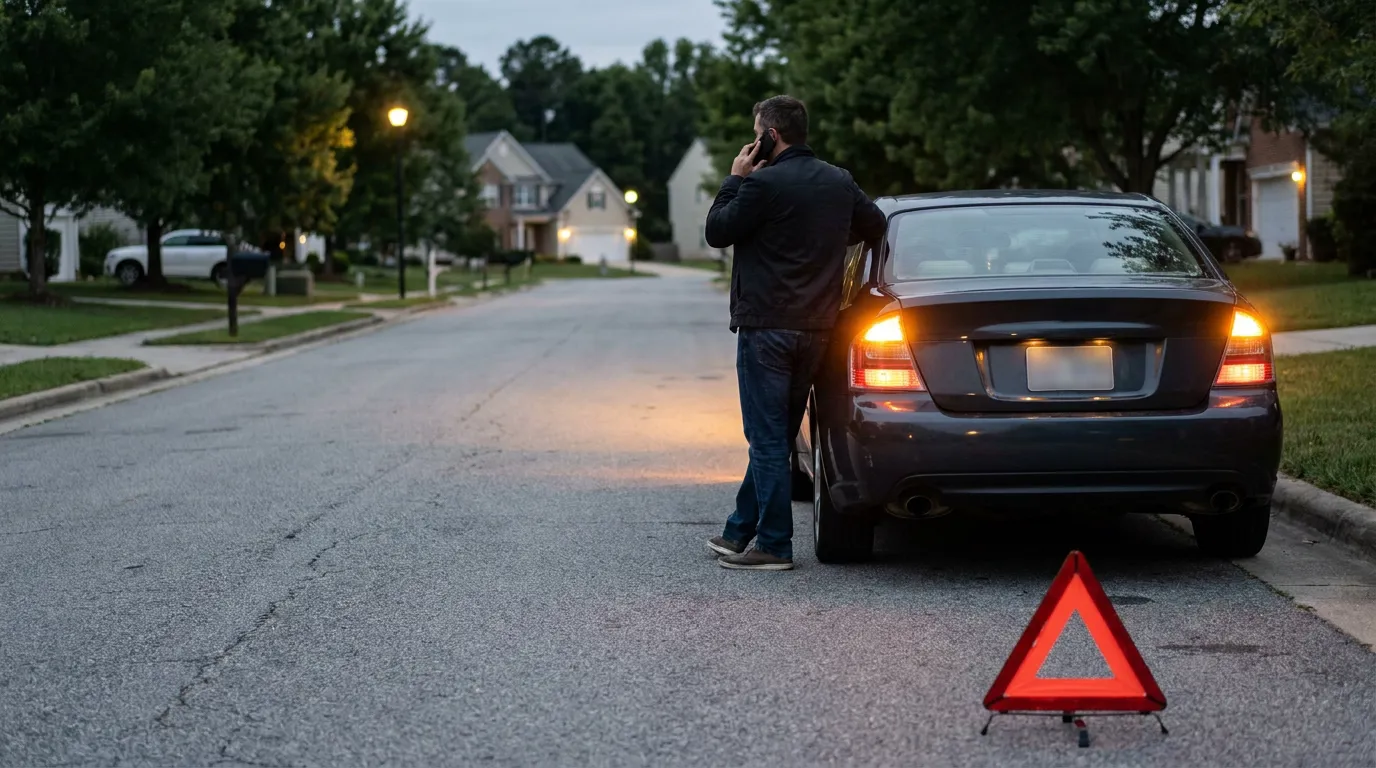
Engine stalling can affect safety in ways few other defects do. When an engine shuts off at speed, you may lose power steering assist, power brake assist, or the ability to speed up out of danger. A stall at an intersection or on an interstate on-ramp puts everyone around you at risk.
North Carolina’s Lemon Law, the New Motor Vehicles Warranties Act in N.C. Gen. Stat. §§ 20-351 through 20-351.10, focuses on defects that substantially impair a vehicle’s value to the consumer. The NC Department of Justice describes covered problems as those that substantially impair the use, market value, or safety of the vehicle. A recurring stalling defect often affects all three. Manufacturers have defenses, such as when the defect results from abuse, neglect, or unauthorized changes to the vehicle.
Common Causes of New Car Stalling
The cause often matters less than whether the manufacturer can fix it. Common causes include faulty fuel pumps, software glitches in the engine control module, faulty start-stop systems, sensor failures, and electrical faults. Intermittent problems are especially frustrating, because a dealer may say it "could not duplicate" the issue.
💡 Pro Tip: If the stall triggers a warning light or stored code, ask the service department to note the code on the repair order. A recorded code can help show the problem is real even when the technician cannot recreate the stall.
Does Your Car Keep Stalling While Driving? Check These Eligibility Rules
Before you count repair visits, confirm that the law covers your vehicle. The NC Lemon Law (N.C. Gen. Stat. 20-351.1 et seq.) generally applies to new motor vehicles sold or leased in North Carolina, but excludes ‘house trailers’ as defined in G.S. 20-4.01 and any motor vehicle with a gross vehicle weight exceeding 10,000 pounds. Several basic conditions usually apply:
- You bought or leased the vehicle new in North Carolina.
- The manufacturer’s express warranty covers the defect.
- You reported the defect within the warranty period or 24 months/24,000 miles of original delivery, whichever comes first.
- The defect substantially impairs the vehicle’s value to you.
- The manufacturer, its agent, or an authorized dealer had a reasonable number of chances to repair it.
The law covers leased vehicles too. Under N.C. Gen. Stat. § 20-351.3(b), if your leased car qualifies, you may recover your lease payments and the amounts you paid to enter the lease, such as the capitalized cost reduction, sales tax, and registration fees, plus incidental and consequential damages, minus a reasonable usage allowance. The lease generally ends without penalty to you, and you receive a refund rather than a choice of replacement.
How North Carolina Defines a "Reasonable Number" of Repair Attempts
North Carolina law presumes the manufacturer had a reasonable number of repair attempts if either of two tests is met. These presumptions appear in N.C. Gen. Stat. § 20-351.5. A presumption can make your claim easier to prove, but it is not the only way to qualify, and a manufacturer may try to rebut it.
The Four-Repair-Attempt Test
Under N.C. Gen. Stat. § 20-351.5(a)(1), the law presumes a reasonable number of attempts if the same defect has been taken in for repair four or more times within the warranty period or 24 months/24,000 miles, whichever is earlier, and still exists. For stalling, this generally means four recorded visits for the same problem, with the stalling still happening after the fourth.
The 20-Business-Day Test
Under N.C. Gen. Stat. § 20-351.5(a)(2), the presumption also applies if the vehicle was out of service for repairs for a total of 20 or more business days during any 12-month period of the warranty. These days do not need to be consecutive.
Many consumers overlook a key step: written notice to the manufacturer. To rely on these presumptions, you generally must notify the manufacturer directly in writing and give it a reasonable period, not more than 15 calendar days, to fix the problem. Telling the dealer is generally not enough, unless the manufacturer did not clearly disclose this notice rule in the warranty or owner’s manual.
💡 Pro Tip: Send your written notice by certified mail with return receipt requested, and keep a copy.
Building a Strong Lemon Law Claim for a Stalling Defect
Dealer and manufacturer repair orders are usually the main evidence in a lemon law claim. Each repair order should show the date, mileage, your description of the problem, and what the technician did. Describe the problem clearly and the same way each time, such as "engine stalls while driving at low speed," so the records show a pattern.
Your own records can support the repair orders but generally cannot replace them. A simple log of stalls, with dates, places, and conditions, along with photos of warning lights or dashcam video, can add helpful detail. Keep copies of all paperwork, rental car receipts, towing bills, and correspondence with the manufacturer.
Common problems include "no problem found" visits and technicians who blame your driving. Ask for a repair order for every visit, even when the shop makes no repair.
What You May Recover if Your Car Is a Lemon
If your vehicle qualifies, the manufacturer generally must replace it or refund you, and for buyers the choice belongs to you, not the manufacturer. This choice comes from N.C. Gen. Stat. § 20-351.3. The table below sums up what a buyer’s refund generally includes under § 20-351.3(a)(1)-(4).
| Refund Component | What It Generally Includes |
|---|---|
| Contract price | Full price, including charges for undercoating, dealer preparation, installed options, and the non-refundable part of extended warranties and service contracts |
| Collateral charges | Sales tax, registration fees, and similar government charges |
| Finance charges | Finance charges incurred after you first reported the defect |
| Damages | Incidental and monetary consequential damages |
| Usage deduction | A reasonable allowance for use, subtracted from the refund |
N.C. Gen. Stat. § 20-351.3(c) sets a formula for the usage deduction. Take the miles you drove up to the date of the third repair attempt for the same defect, or the twentieth cumulative business day the vehicle was out of service for repairs, whichever happens first, multiply that number by the purchase price, and divide by 120,000. For example, if you drove 9,000 miles by that point on a $40,000 car, the deduction would generally be $3,000. The manufacturer generally pays any refund to you and any lienholder, based on each party’s interest.
North Carolina law also protects future buyers. Under N.C. Gen. Stat. § 20-351.3(d), if the manufacturer resells a returned vehicle, it must tell the next buyer in writing before the sale that the vehicle was returned and what the defect was.
Timing Matters for Your Claim
Deadlines can affect your rights, so act promptly. North Carolina’s lemon law does not set its own filing deadline. Instead, claims are generally subject to the three-year statute of limitations under N.C. Gen. Stat. § 1-52, but this period typically runs from the date the cause of action accrues, which is generally when the manufacturer’s last reasonable opportunity to repair the defect has passed, such as after the fourth unsuccessful repair attempt or 20 cumulative business days out of service, rather than from the vehicle’s original delivery date. Separately, N.C. Gen. Stat. § 20-351.7 requires you to give the manufacturer 10 days’ written notice of your intent to sue, and allows the manufacturer to require you to use a qualifying informal dispute settlement procedure before you file suit.
Frequently Asked Questions
1. Does my car have to stall four times before I have a claim?
Not necessarily. Four repair attempts create a legal presumption, but you may still qualify based on 20 or more business days out of service or other evidence that the manufacturer had a reasonable chance to fix the problem.
2. What if the dealer cannot reproduce the stalling?
That happens often with intermittent problems. Make sure every visit produces a repair order describing your complaint, since recorded visits may help show a pattern.
3. Is my used car covered?
No. Under North Carolina’s Lemon Law (New Motor Vehicles Warranties Act, N.C. Gen. Stat. 20-351 et seq.), used cars are not covered, even if the vehicle is still under the manufacturer’s original warranty and a defect was reported within 24 months or 24,000 miles of original delivery; the state Lemon Law applies only to new motor vehicles purchased or leased in North Carolina by the original consumer. Owners of used vehicles with a remaining manufacturer’s warranty may instead have recourse under the federal Magnuson-Moss Warranty Act.
4. Can I choose a refund instead of a replacement?
Generally, yes. Under N.C. Gen. Stat. § 20-351.3(a), buyers make that choice, not the manufacturer. Lessees generally receive a refund and the lease ends.
5. Do I need to contact the manufacturer myself?
In many cases, yes. To use the presumptions in the statute, you generally must send written notice directly to the manufacturer, unless the manufacturer failed to clearly disclose that rule in the warranty or owner’s manual.
Protecting Yourself From a Car You Cannot Trust
A car that keeps stalling while driving puts your safety at risk, and North Carolina law may give you a path to a refund or replacement. Your claim will usually depend on a clear repair history, a defect that substantially impairs the vehicle’s value, timely written notice to the manufacturer, and action within the legal deadlines.
Jeffries Law helps North Carolina drivers stand up to manufacturers when their new vehicles keep failing. Whether your problem is stalling or another serious defect, such as power steering failure, call 877-454-6045 or schedule your free case review today.
Disclaimer: This content is for informational purposes only and is not legal advice. Every case is unique, and results may vary. Consult an attorney about your specific circumstances.