
A Recall That Won’t Stay Fixed: What Durango Owners Should Know
Key Takeaways: If your Durango keeps going back for the same spoiler recall, the first fix may not have solved the real problem. That problem may be that the spoilers were manufactured to stick out too far from the roof, causing them to be struck and damaged by the liftgate when opened or closed, which over time could cause the spoiler to detach, so repeating the same fix without addressing that clearance issue could fail again. Recalls are federal safety fixes. Texas lemon law is a separate state protection, and getting a recall repair generally does not waive your lemon law rights. Texas generally presumes a reasonable number of repair attempts after four tries for the same defect, two for a serious safety hazard, or 30 total days out of service, though conditions and deadlines apply. Whether a loose spoiler counts as a serious safety hazard depends on the facts. The Texas DTPA may also apply if someone misled you about whether the defect was fixed. Repair orders from authorized dealers are often your main evidence, so make sure each one lists your complaint, the recall number, the dates in and out, and your mileage. Jeffries Law offers free reviews for Texas owners of 2020 and newer vehicles stuck in repeated repair cycles.
If your Durango keeps going back to the dealer for the same rear spoiler recall, the first fix may never have solved the real problem. Consumer Reports covered the Dodge Durango rear spoiler recall and reported that the spoilers were manufactured to stick out too far from the roof, causing them to be struck and damaged by the liftgate when opened or closed; over time this could cause the spoiler to detach while the vehicle is in motion. A spoiler that comes loose at highway speed can become a road hazard for other drivers. When the underlying clearance or alignment issue is the real problem, a repair that does not address it may fail again. Repeated repair visits for the same part may matter under Texas law, and for some owners they may help support a lemon law claim, depending on timing, warranty coverage, and the facts.
You do not have to sort this out alone. Jeffries Law represents Texas vehicle owners stuck in repeated repair cycles on 2020 and newer vehicles. Call 877-454-6045 or contact us now for a free review of your repair history.
Understanding the Dodge Durango Rear Spoiler Recall
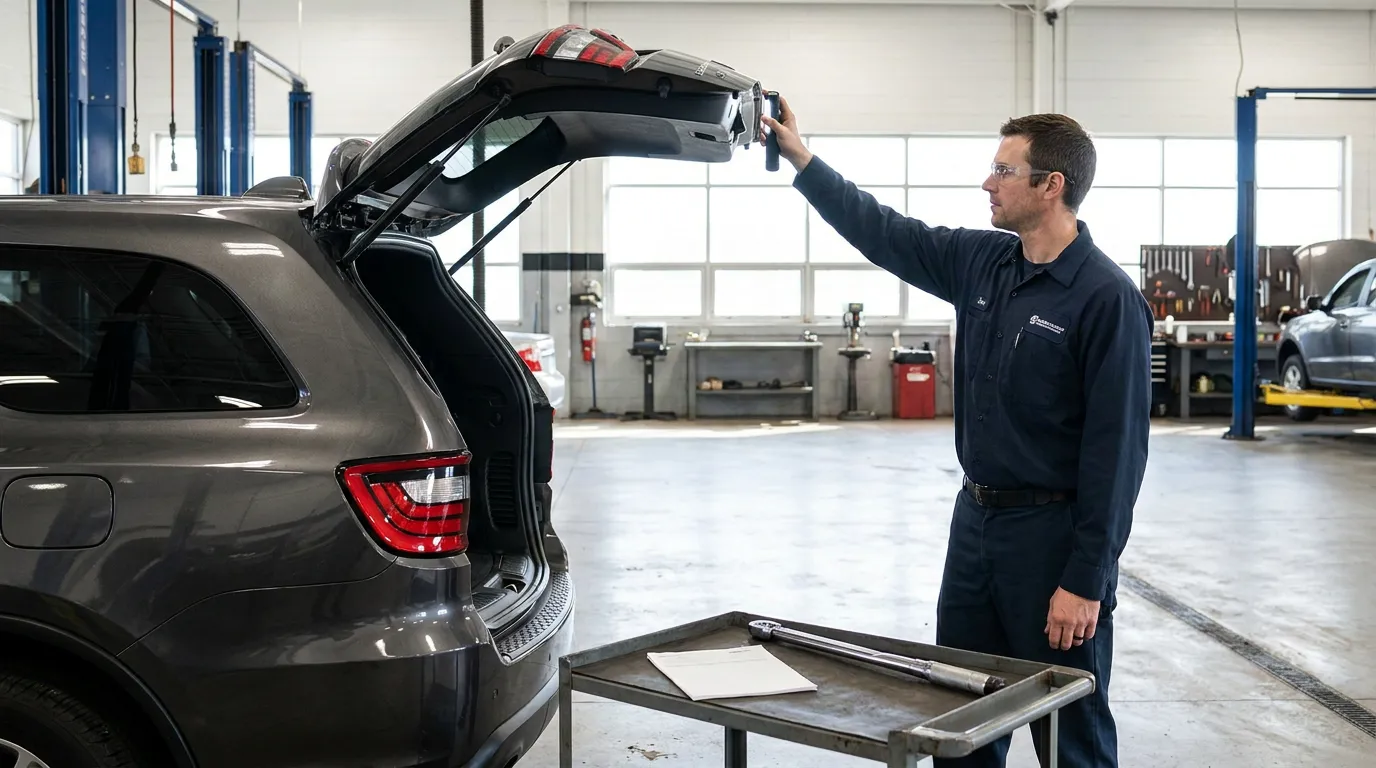
The recall covers rear spoilers that may come off the Durango while it is moving. According to Consumer Reports’ recall coverage, the risk comes from spoilers manufactured to stick out too far from the roof, which can be struck and damaged by the liftgate when it is opened or closed, and over time this can cause the spoiler to detach. Because this is an official manufacturer recall, the problem affects a group of vehicles rather than just one. The recall applies only to certain Durango model years and production ranges, so check that your VIN is included.
Recalls are federal safety fixes, and lemon laws are state consumer protections. The National Highway Traffic Safety Administration (NHTSA) oversees recalls. State lemon laws address what happens when a manufacturer cannot fix a warranty-covered defect after a reasonable number of attempts. The two systems can overlap, but they are legally separate. Getting a recall repair generally does not waive your lemon law rights.
Why a Recall Fix Might Fail More Than Once
A repeat recall may mean the first fix did not address the root cause. If the clearance between the spoiler and the liftgate is not corrected, reattaching or replacing the part without fixing that underlying issue may lead to the same failure. Manufacturers sometimes revise a fix after field reports show the earlier one did not hold, and owners then get called back again.
Consumer Reports reports that to fix the problem, Dodge dealers will replace the rear spoiler with a new part, free of charge. Keep going to an authorized dealer, because those visits produce the official repair orders that can later serve as key evidence.
💡 Pro Tip: Before you leave the dealership, check that every repair order lists your complaint, the recall number, the date in, the date out, and your mileage. Ask for corrections before you sign.
When Repeat Durango Spoiler Repairs Become a Lemon Law Issue
Repeat repairs may support a lemon law claim if a warranty-covered defect seriously harms the vehicle’s use or market value, or creates a serious safety hazard, and stays unfixed after a reasonable number of attempts. Texas’s lemon law is in Texas Occupations Code Chapter 2301, Subchapter M, and the Texas Department of Motor Vehicles (TxDMV) runs it. Texas generally presumes a reasonable number of attempts has occurred in these cases:
-
Four or more repair attempts for the same defect, within the warranty term or within 24 months or 24,000 miles, whichever comes first
-
Two or more repair attempts for a serious safety hazard, under the same timing rules
-
A vehicle out of service for repair for 30 or more days in total, subject to certain conditions
A loose spoiler may qualify as a serious safety hazard, but that depends on the facts. Texas defines a serious safety hazard as a life-threatening defect that substantially impedes a person’s ability to control or operate the vehicle for ordinary use or intended purposes, or that creates a substantial risk of fire or explosion. Whether a loose spoiler meets that standard is open to debate, so get a review of your own case. You generally must give the manufacturer written notice and a chance at a final repair. You generally must file a Texas lemon law complaint within six months after the earliest of warranty expiration, 24 months, or 24,000 miles, so waiting can put your rights at risk.
|
Situation |
What It May Mean |
|---|---|
|
Recall repair done once, problem solved |
Generally no lemon law claim |
|
Two failed repairs on a safety-related defect |
May meet Texas’s serious safety hazard threshold |
|
Four or more attempts on the same defect |
May create a presumption of reasonable attempts |
|
30+ total days out of service |
May support a claim, subject to conditions |
Do Recall Visits Count as Repair Attempts?
Recall visits may count as repair attempts when you present the same warranty-covered defect and the dealer repairs it, though manufacturers sometimes dispute this. Whether each visit counts depends on how the repair orders describe the problem and the work done. Manufacturers have also argued that recurring problems are “normal.” You can read about your rights when a manufacturer says a recurring glitch is normal.
How Texas Consumer Protection Law May Apply to a Failed Recall Fix
The Texas Deceptive Trade Practices Act may apply if someone misled you about whether a safety defect was actually fixed. Texas Business and Commerce Code § 17.46(a) makes false, misleading, or deceptive acts in trade or commerce unlawful. The state’s consumer protection division can enforce it, and consumers may be able to sue under § 17.50 in certain cases.
Intent can matter. Under Texas Business and Commerce Code § 17.45(13), acting “intentionally” means actual awareness of the falsity, deception, or unfairness of the act, or of the condition or defect that breaches a warranty, along with a specific intent that the consumer act in detrimental reliance. Courts may infer intent from objective signs of that awareness and intent. If a dealer or manufacturer knew earlier fixes were failing and still told you the problem was solved, that knowledge could matter and may affect the damages you can recover. Repair orders, recall notices, and dealer statements could serve as evidence. DTPA claims generally require 60 days’ written notice before you sue and must generally be filed within two years.
Who Is the Responsible “Manufacturer”?
Texas defines “manufacturer” broadly for products liability purposes. Texas Civil Practice and Remedies Code § 82.001(4) includes a person who designs, formulates, constructs, rebuilds, fabricates, produces, compounds, processes, or assembles a product or a part of it and places it into the stream of commerce. Section 82.001(2) defines a products liability action as a claim for personal injury, death, or property damage allegedly caused by a defective product. That law could apply if a spoiler came off and caused harm, but a products liability case is separate from a lemon law claim.
Texas Inspections and Open Recalls
Texas law may make open recalls easier for owners to see. Under Texas Health and Safety Code § 382.202, in counties that take part in the emissions inspection program, the state may adopt rules to add a notice about open safety recalls to inspection reports. Whether such a notice appears depends on adopted rules and available data. Track whether each recall repair was actually completed.
💡 Pro Tip: Run your VIN through NHTSA’s recall lookup after every service visit to confirm that the recall shows as completed.
Building a Strong Record Before You Talk to a Lemon Law Attorney
Dealer and manufacturer repair orders are often the main evidence in a lemon law claim. Your own notes, photos, and call logs can add useful detail, but they do not replace the official records. Collect every repair order, recall letter, and message to or from Stellantis or the dealer. If you are tracking days out of service, the in and out dates on the repair orders generally matter most. A Durango spoiler recall repeat repairs lawyer can review whether your records meet Texas thresholds.
Frequently Asked Questions
1. Does a recall repair stop me from filing a lemon law claim?
Generally, no. A recall and a lemon law claim are separate. Whether repeated recall repairs support a claim depends on your repair records, timing, warranty coverage, and whether the defect seriously harms the vehicle or creates a serious safety hazard.
2. How many failed repairs make my Durango a lemon in Texas?
Texas generally presumes a reasonable number of attempts after four repairs for the same defect (subject to 12-month/12,000-mile sub-windows), two for a serious safety hazard, or 30 cumulative days out of service (excluding loaner days) within the warranty term or 24 months/24,000 miles—though meeting a presumption is not strictly required if your records otherwise show a reasonable number of repair opportunities.
3. Is a loose spoiler a serious safety hazard?
It could be. The answer depends on whether the defect meets Texas’s legal definition, which turns on the facts of your case.
4. My Durango is a 2019 model. Can Jeffries Law help?
Jeffries Law accepts cases for model year 2020 and newer vehicles.
5. Should I keep taking it to the dealer?
Generally, yes. Authorized dealer visits create the official repair records that a lemon law claim usually relies on.
Protecting Your Rights After a Repeated Recall
Repeated recall visits for the same spoiler can be a sign that the defect was never properly fixed. Texas lemon law, the DTPA, and products liability law may each offer remedies, depending on your facts and deadlines. Accurate dealer repair records are generally the basis of any claim.
If your Durango keeps going back for the same problem, get answers now. Jeffries Law helps Texas owners pursue buybacks, replacements, and settlements. Call 877-454-6045 or schedule your free review today.
Disclaimer: This content is for informational purposes only and is not legal advice. Every case is unique, and results may vary. Consult an attorney about your specific circumstances.