
When a Dead Battery Becomes More Than an Inconvenience
Key Takeaways: A car battery that keeps dying overnight can help make a new vehicle a lemon under Texas law if the electrical drain keeps coming back after several warranty repair attempts. One dead battery that is fixed for good is usually just a routine warranty repair. Under Texas Occupations Code § 2301.605, a reasonable number of repair attempts may be presumed based on repeated repairs, a serious safety hazard, or more than 30 days out of service within 24 months or 24,000 miles. Owners must generally file a complaint with the TxDMV within six months after the earliest of warranty expiration, 24 months, or 24,000 miles. Express warranties, implied warranties, and revocation of acceptance under the Texas Business and Commerce Code may offer separate remedies even if the vehicle isn’t a lemon. Consistent repair orders, prompt notice to the seller, and attention to deadlines are key to protecting a claim.
A car battery that keeps dying overnight can, in some cases, help qualify a new vehicle as a lemon under Texas law. A single dead battery usually won’t be enough. A recurring electrical drain that the dealer can’t fix after repeated warranty visits is different, especially if it strands you or keeps the car in the shop for weeks. Whether your vehicle qualifies generally depends on the defect’s seriousness, the number of repair attempts, the days out of service, whether the manufacturer got written notice and a final chance to repair, and whether you met the legal deadlines.
If your new car won’t start in the morning no matter how many times the dealer “fixes” it, a car battery keeps dying overnight lawyer at Jeffries Law can review your repair history and explain your options. Call 877-454-6045 or contact us now to discuss your situation.
Why a Car Battery Keeps Dying Overnight in New Vehicles
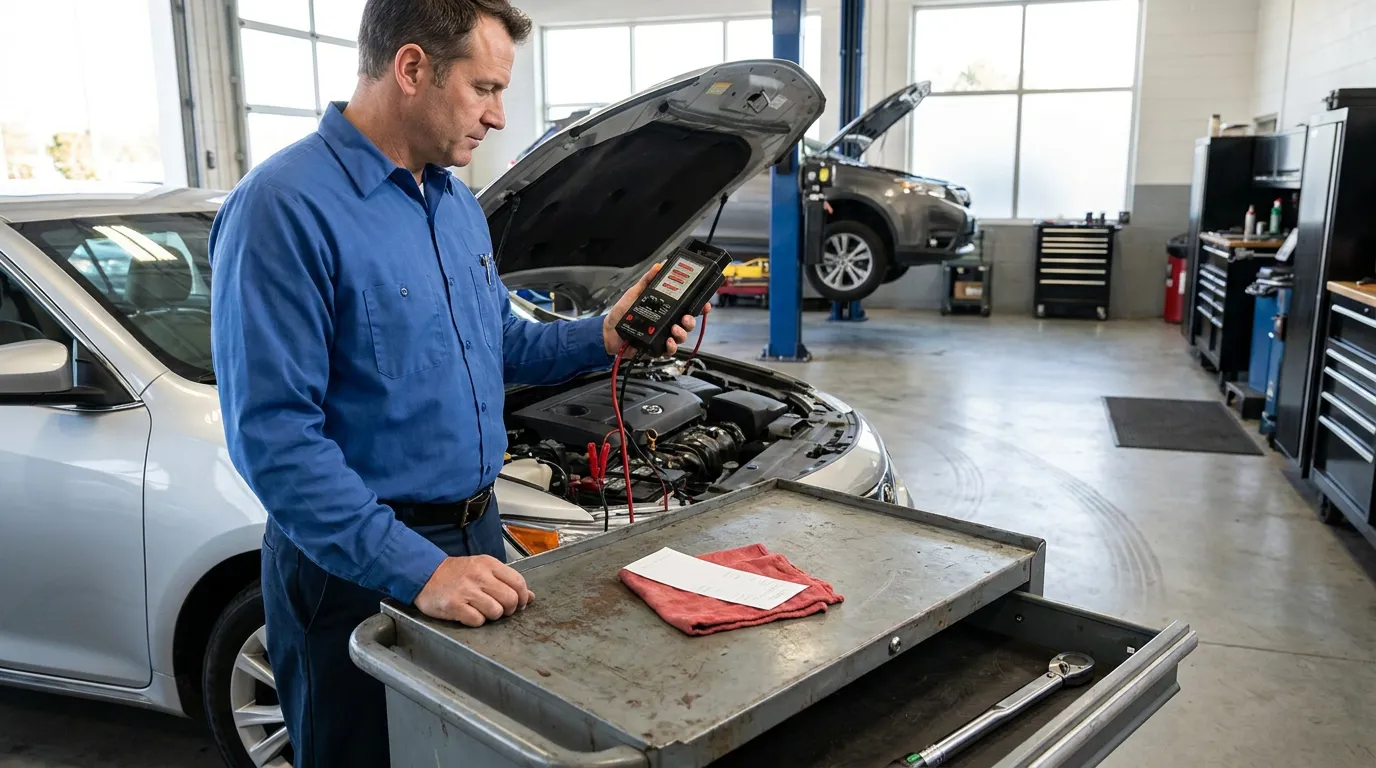
On a new vehicle, overnight battery drain often points to a defect, not normal wear. Modern vehicles rely on control modules, infotainment systems, telematics, and sensors that should shut down once the car is off. When one stays on, it can drain the battery until the engine won’t crank. Owners often get a new battery and see the same problem return weeks later.
That repeat cycle matters legally. A battery that is replaced once and works afterward is normally a routine warranty repair. A drain that continues after several battery replacements, software updates, or module swaps looks like the kind of unresolved defect lemon laws cover.
Common Causes Dealers Investigate
Dealers usually run “parasitic draw” tests to find what is pulling power while the car is off. Common suspects include:
-
Infotainment or telematics modules that fail to shut down
-
Faulty body control modules or wiring harness shorts
-
Software glitches that keep systems running
-
Defective factory batteries or charging parts
-
Accessories installed at the dealership
A drain that comes and goes can be hard to reproduce during a short shop visit. That is why repair orders from each visit matter. They can show that you reported the problem, even when the technician wrote “could not duplicate.”
How the Texas Lemon Law Defines a Lemon Vehicle
The Texas Lemon Law, found in Texas Occupations Code Chapter 2301, covers new vehicles with warranty-covered defects that substantially impair their use or market value, or that create a serious safety hazard. The manufacturer must also have failed to fix the defect after a reasonable number of attempts. A car that won’t reliably start can arguably impair its use and market value and, in some cases, create a safety hazard. Hearing examiners and courts look at the specific facts, so an occasional drain may be treated differently from one that strands you several times a month.
The “Reasonable Number of Attempts” Presumption
Under Texas Occupations Code § 2301.605, the law presumes a reasonable number of attempts in certain situations. These generally apply to repairs within 24 months or 24,000 miles of delivery, whichever comes first. A lemon laws 50-state survey shows that Texas uses repair attempts and days out of service as its main markers.
|
Presumption Path |
General Requirement |
|---|---|
|
Repeated repairs |
The same defect (nonconformity) continues to exist after being subject to repair four or more times—specifically, two repair attempts within the first 12 months or 12,000 miles (or express warranty term, whichever is earlier), plus two additional attempts within 12 months or 12,000 miles following the second attempt |
|
Serious safety hazard |
The defect creates a serious safety hazard and was subject to repair two or more times within the express warranty term or the first 24 months or 24,000 miles, whichever comes first |
|
Days out of service |
The vehicle was out of service for repairs for a cumulative total of 30 or more days within the express warranty term or the first 24 months or 24,000 miles, whichever comes first (with at least two repair attempts occurring within that period, and excluding days a comparable loaner vehicle was provided) |
These presumptions are not the only way to show a vehicle is a lemon, and meeting them doesn’t guarantee a result. The law also generally requires written notice to the manufacturer and a final chance to repair. Days when you had a loaner may not count toward the 30-day total. A battery that dies overnight and strands you at night or in extreme heat could support a safety argument, but the law defines “serious safety hazard” narrowly.
Filing Deadlines You Should Not Miss
You generally file a Texas Lemon Law complaint with the Texas Department of Motor Vehicles. Under Texas Occupations Code § 2301.606(d), you usually must file within six months after the earliest of the warranty expiring, 24 months from delivery, or 24,000 miles. This is separate from the time limits for warranty lawsuits in court, which generally run four years under Tex. Bus. & Com. Code § 2.725.
Warranty Rights Beyond the Lemon Law
Even if your car doesn’t meet the lemon law presumptions, Texas warranty law may give you other remedies. These rights come from the Texas Business and Commerce Code and can apply alongside a lemon law claim. Filing a TxDMV complaint can affect some other remedies, so choose with care.
Express and Implied Warranties
Your written factory warranty is an express warranty, but it may not be the only one. Under Texas Business and Commerce Code § 2.313, any statement of fact, promise, or description that becomes part of the basis of the bargain can create an express warranty. General sales talk or opinion usually does not.
Texas law also implies a warranty of merchantability when a merchant, such as a car dealer, sells a vehicle. Under Tex. Bus. & Com. Code § 2.314(a), (b)(3), goods must be fit for their ordinary purposes, unless the seller properly excludes or changes that warranty. A new car that won’t start in the morning may not meet that standard. If the seller had reason to know your particular purpose and you relied on its skill or judgment, § 2.315 may also imply a warranty of fitness for that purpose.
What your sales paperwork says matters. Under Tex. Bus. & Com. Code § 2.316(b), (c)(1), written exclusions must be conspicuous, and terms like “as is” generally exclude implied warranties. But a seller that gives a written warranty or sells a service contract generally can’t disclaim implied warranties under the federal Magnuson-Moss Warranty Act, though it may limit their duration.
💡 Pro Tip: Pull out your buyer’s order and warranty booklet now. Check for any warranty disclaimers, and keep these documents with your repair orders.
Revoking Acceptance When Repairs Keep Failing
Texas law may let you revoke acceptance of a vehicle whose defect substantially impairs its value to you. Under Tex. Bus. & Com. Code § 2.608(a)-(c), this can apply if you accepted the car reasonably assuming the defect would be fixed and it wasn’t, or if you accepted it without finding the defect because it was hard to find or because of the seller’s assurances. You must revoke within a reasonable time after you find or should have found the problem and before the vehicle’s condition changes substantially for reasons other than the defect. Revocation takes effect only once you notify the seller, and it is generally available against the seller, not a manufacturer you didn’t buy from directly.
If revocation is justified, you may cancel and recover the part of the price you already paid, along with other remedies. Bad timing or heavy continued use of the vehicle can weaken a claim.
Protecting Your Claim With the Right Evidence
Dealer and manufacturer repair orders are often the main evidence in a lemon law claim. Each order should show the date, mileage, your complaint, and what the technician did. Ask for a copy every time, even when the dealer says it couldn’t find a problem. Your own notes, photos of a dead dashboard, and tow or jump-start receipts can support the repair records, but they don’t replace them.
Prompt notice is also a legal requirement. Under Tex. Bus. & Com. Code § 2.607(c)(1), (d), a buyer who has accepted goods must notify the seller of a breach within a reasonable time after finding it or when they should have found it, or lose any remedy. Report each overnight drain promptly and keep copies of all letters and emails.
💡 Pro Tip: When you describe the problem at the service desk, use the same clear wording each time, such as “battery dies overnight, vehicle will not start.” Consistent wording can help show that the repair orders all involve the same defect.
Used Cars, BBB AUTO LINE, and Other Paths
Protections for used vehicles generally differ from those for new ones. Used cars sold “as is” may not carry the same warranty protections. Under Texas Occupations Code § 2301.601(2), the Texas Lemon Law generally applies to new motor vehicles (as well as demonstrator vehicles that have not been previously titled). Used vehicles are generally not covered under the repurchase or replacement provisions of the Texas Lemon Law—even if still under the original manufacturer’s warranty—though used car buyers may still have warranty enforcement rights under the Texas Business and Commerce Code or the federal Magnuson-Moss Warranty Act. Some manufacturers also use BBB AUTO LINE, an outside dispute program, to decide whether a vehicle is a lemon. That program is separate from the TxDMV complaint process and from a lawsuit, and a decision you accept may be binding, so learn how each path affects your rights first.
Frequently Asked Questions
1. Does one dead battery make my car a lemon?
Generally, no. A single battery failure that is fixed is usually a routine warranty matter. A recurring drain that continues after multiple repair attempts or keeps the car in the shop for a long time is more likely to support a claim.
2. What if the dealer says it “could not duplicate” the problem?
The visit can still show that you reported the defect, although whether it counts as a repair attempt may depend on the facts. Keep the repair order.
3. Is a battery drain a safety issue?
It can be. A car that won’t start or loses power without warning may leave you stranded in dangerous conditions, but whether it counts as a “serious safety hazard” depends on the facts.
4. How long do I have to file a Texas Lemon Law complaint?
Under Texas Occupations Code § 2301.606(d), the complaint is generally due within six months after the earliest of warranty expiration, 24 months, or 24,000 miles. Warranty lawsuits have separate deadlines.
5. Can I pursue warranty claims if my car isn’t a lemon?
Possibly. Express warranties, implied warranties, and revocation of acceptance under the Texas Business and Commerce Code may provide separate remedies in some cases.
Turning a Recurring Drain Into a Documented Claim
A battery that keeps dying overnight can become a legal claim once repeated repairs fail. The Texas Lemon Law may lead to a buyback or replacement, and warranty and revocation rights may give owners other relief. Strong repair records, prompt notice, and attention to filing deadlines often make the difference. Every case depends on its own facts.
If you’re unsure whether your situation qualifies, learn how to know your car is a lemon and then reach out to Jeffries Law. Call 877-454-6045 or schedule your free case review today.
Disclaimer: This content is for informational purposes only and is not legal advice. Every case is unique, and results may vary. Consult an attorney about your specific circumstances.