
When a Dashboard Warning Light Becomes a Legal Problem in Texas
Key Takeaways: Two unsuccessful airbag light repairs may trigger the Texas Lemon Law’s reduced repair-attempt standard, but only if the underlying SRS defect is a serious safety hazard rather than a routine nonconformity, and only if those attempts fall within the statute’s warranty and mileage windows. Texas Occupations Code Chapter 2301, Subchapter M sets a rebuttable presumption generally requiring four repair attempts for the same defect, which may drop to two for serious safety hazards, and offers a separate 30-day out-of-service pathway. A qualifying defect must be covered by the manufacturer’s warranty and must either create a serious safety hazard or substantially impair the vehicle’s use or market value; a serious safety hazard is a life-threatening malfunction that substantially impedes the driver’s ability to control or operate the vehicle or creates a substantial risk of fire or explosion. Outcomes often depend on detailed repair orders, consistent complaint descriptions, recurring diagnostic trouble codes, and compliance with written notice, warranty, and mileage deadlines. Claims generally proceed through the Texas Department of Motor Vehicles administrative process, and manufacturers may require consumers to first use a qualifying informal dispute settlement program, separate from any civil warranty lawsuit. Available remedies may include repurchase with a reasonable use allowance deducted, or replacement where the parties agree, though outcomes always turn on the specific facts and documentation.
Two unsuccessful airbag light repairs can potentially satisfy the Texas Lemon Law’s reduced repair-attempt standard, but only if the underlying defect qualifies as a serious safety hazard and the attempts occur within the statutory time and mileage periods. Texas Occupations Code Chapter 2301, Subchapter M generally creates a presumption that a reasonable number of attempts has been made after four unsuccessful repairs for the same defect while the vehicle remains under warranty. That threshold may drop to two attempts when the nonconformity creates a serious safety hazard, and an SRS malfunction that may prevent proper airbag deployment is sometimes evaluated under that expedited standard, though the manufacturer may contest that characterization.
If your 2020 or newer vehicle keeps returning to the dealer with the same illuminated SRS warning, the team at Jeffries Law can review your repair history and explain your options. Call 877-454-6045 to discuss what your records show, or contact us now to start a case review. An early look at your documentation often clarifies whether you have a viable path forward.
How Texas Defines a Qualifying Defect
Texas law does not treat every annoyance as a lemon law defect. Under Texas Occupations Code § 2301.601 et seq., a qualifying nonconformity must be covered by the manufacturer’s express warranty and must either create a serious safety hazard, a life-threatening malfunction that substantially impedes the driver’s ability to control or operate the vehicle or creates a substantial risk of fire or explosion, or substantially impair the vehicle’s use or market value. That structure matters for airbag cases, because a warning light often has no effect on how the car drives.
Academic commentary on state lemon statutes, many drawing on the Uniform Commercial Code and operating alongside the federal Magnuson-Moss Warranty Act, explains that safety impairment may stand as an independent qualifying category. A scholarly discussion of lemon law defect standards suggests a defect may satisfy the statutory test through safety impairment alone, without showing the vehicle is undriveable. That commentary is persuasive only, not binding on Texas hearing officers, but it can be what allows an airbag warning light lemon law claim to proceed.
Why Drivability Is Not the Deciding Factor
A car with a persistent SRS light may drive perfectly well, and manufacturers frequently make that argument. A supplemental restraint system that may fail to deploy in a collision may qualify as a serious safety hazard under the statutory definition, even while every other system functions normally. The consumer still bears the burden of showing an actual nonconformity rather than a sensor or software fault that has been corrected.
Courts and administrative hearing officers generally evaluate these questions fact-by-fact, depending on what the diagnostic records show, whether the defect recurred after each repair, and how the manufacturer documented the condition.
The Serious Safety Hazard Test Texas Consumers Must Meet
A "serious safety hazard" under Texas Occupations Code § 2301.601 is generally a life-threatening malfunction or nonconformity that substantially impedes the driver’s ability to control or operate the vehicle for ordinary use, or that creates a substantial risk of fire or explosion. Airbag system failures don’t neatly match the "control or operate" language, which is why these claims may require careful development rather than assumption. The argument generally rests on the life-threatening character of a restraint system that may not function in a crash, and hearing officers have not applied that theory uniformly.
The Texas State Law Library, a nonpartisan government research resource, maintains a helpful public explanation of Texas Lemon Law requirements, including the distinction between standard and safety-related repair thresholds. Reviewing that summary alongside your own repair orders can help clarify where your situation may fall. For a deeper breakdown, see our discussion of what qualifies as a serious safety hazard.
Comparing the Repair-Attempt Thresholds
| Pathway | Attempts or Days Required | Typical Application |
|---|---|---|
| Standard nonconformity | Four repair attempts for the same defect, split between the first and second 12-month or 12,000-mile periods | Infotainment, minor electrical, recurring rattles |
| Serious safety hazard | Two repair attempts, one in the first 12-month or 12,000-mile period and one in the next | Life-threatening defects meeting the statutory definition |
| Out-of-service test | 30 or more cumulative days within the first 24 months or 24,000 miles, excluding days a comparable loaner was provided | Vehicles repeatedly held for warranty work |
These figures reflect the rebuttable presumption provisions of Texas Occupations Code § 2301.605(a). A presumption is not a guarantee, and a consumer who doesn’t meet it may still attempt to prove a reasonable number of repair attempts. It may shift the analysis in the consumer’s favor when statutory conditions are met, subject to timing requirements and manufacturer rebuttal.
Building an Airbag Warning Light Lemon Law Claim on Solid Records
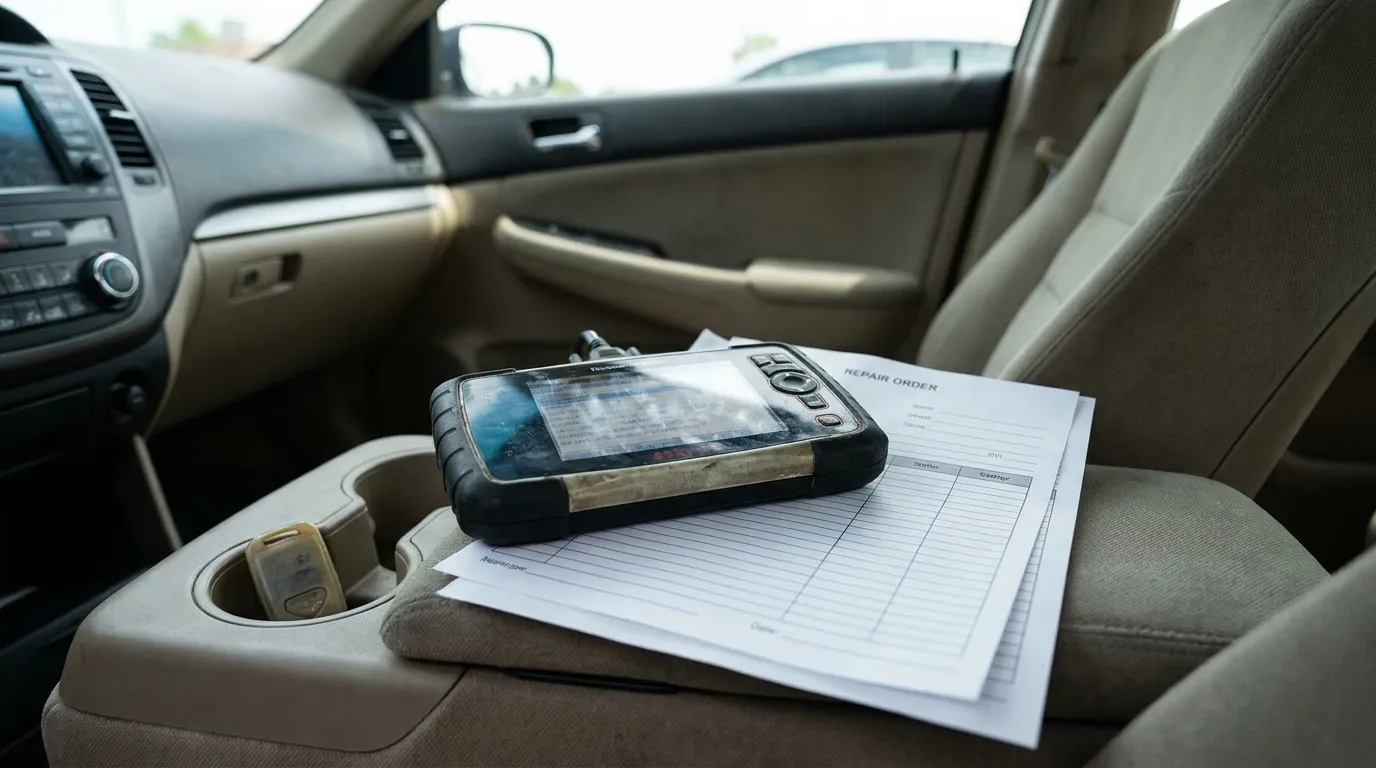
Dealer and manufacturer repair orders are typically the primary evidence in a Texas lemon law matter. Each visit should generate a written repair order identifying the customer complaint, diagnostic findings, parts replaced, and dates in and out of the shop. Your own notes, photographs of the illuminated indicator, and a dated communication log can be valuable supplements, but they generally support the official documentation rather than replace it.
Common problems arise when a visit is recorded as "no fault found" or when the complaint is described inconsistently across visits. Consumers may reduce that risk by describing the symptom the same way each time and requesting a printed copy of every repair order before leaving the service department.
- Keep every repair order, including visits where no repair was performed
- Note the exact mileage and date for each service appointment
- Preserve loaner car agreements, which help establish days out of service
- Save written and electronic communications with the dealer and manufacturer
- Photograph the warning light with a timestamp when it reappears
💡 Pro Tip: Ask the service advisor to record the specific SRS diagnostic trouble code on your repair order. A recurring code across multiple visits generally provides stronger support for a same-defect argument than a generic narrative description.
Where Texas Lemon Law Claims Are Actually Filed
Texas Lemon Law relief generally runs through an administrative process, not a courthouse filing alone. The Texas Department of Motor Vehicles administers the statutory complaint and hearing procedure, and the agency’s consumer protection lemon law resources describe the repair-attempt criteria it applies. Filing requires a complaint form and a fee, and the process is generally separate from any civil warranty lawsuit a consumer might otherwise pursue.
Some manufacturers maintain informal dispute settlement programs, such as BBB Auto Line, and where a program complies with federal and state requirements a consumer may be required to use it before the agency will act on the complaint. Those programs are operated by manufacturers or third parties rather than the state, and their procedures often track agency standards.
Written Notice and Timing Considerations
Texas generally requires consumers to give the manufacturer written notice of the defect and a reasonable opportunity to cure before relief becomes available. The statute also requires a complaint be filed within a limited window measured from the earlier of the express warranty’s expiration or the statute’s 24-month or 24,000-mile benchmarks, and hearing officers may apply these deadlines strictly. Any argument for extending a deadline is generally interpreted narrowly and is not automatic.
Administrative filing deadlines with the TxDMV generally operate independently from civil statutes of limitations for breach of warranty. Missing one does not necessarily eliminate the other, but the safer approach is to evaluate both timelines early.
What Relief May Be Available
When a claim succeeds, statutory remedies may include repurchase or replacement. A Texas vehicle buyback generally involves the manufacturer refunding the purchase price, plus certain qualifying fees, less a reasonable allowance for the consumer’s use of the vehicle. Replacement with a comparable vehicle may be an alternative remedy where the parties agree.
Results vary considerably based on the strength of the repair record, the age and mileage of the vehicle, and the manufacturer’s willingness to resolve the matter before a hearing. No outcome can be predicted in advance, and settlements often depend on facts unique to each file.
Frequently Asked Questions
1. Does an SRS light alone qualify my vehicle as a lemon in Texas?
Not automatically. The light must reflect an actual warranty-covered nonconformity that either creates a serious safety hazard or substantially impairs the vehicle’s use or market value, and the statutory repair-attempt, notice, and filing conditions must also be satisfied.
2. What if the dealer says the light was reset and no fault was found?
Those visits may still matter. A documented visit for the same complaint may count toward repair attempts even when the technician records no repair, though hearing officers weigh such entries case by case and a manufacturer may argue the visit wasn’t a repair attempt.
3. Do the two repair attempts need to happen within a certain time?
Generally, yes. Under Texas Occupations Code § 2301.605(a), the qualifying attempts must generally occur within specified warranty, time, and mileage windows, which is why documenting dates and odometer readings matters.
4. Can a leased vehicle qualify for Texas Lemon Law relief?
Lessees of covered vehicles may generally pursue relief under Chapter 2301, with refunds allocated between the lessee and lessor, subject to the specific lease structure and statutory eligibility conditions.
5. Does the administrative process replace a civil warranty lawsuit?
Generally, no. The TxDMV process is a separate statutory track, and consumers may have distinct rights under federal warranty law depending on the circumstances.
Protecting Yourself When the Light Keeps Coming Back
Two unsuccessful airbag repairs may meet the reduced Texas threshold when the defect is established as a serious safety hazard under Texas Occupations Code Chapter 2301, Subchapter M and the attempts fall within the statutory periods. The analysis generally depends heavily on the repair orders, the consistency of the documented complaint, and compliance with notice and filing rules. Nothing about the reduced standard is automatic, the presumption remains rebuttable, and manufacturers routinely dispute whether a warning light reflects a genuine safety nonconformity.
If your late-model vehicle has been back to the dealer twice or more for the same restraint system problem, the attorneys at Jeffries Law are prepared to review your file. Call 877-454-6045 or schedule a consultation to discuss what your repair history may support under Texas law.
Disclaimer: This content is for informational purposes only and is not legal advice. Every case is unique, and results may vary. Consult an attorney about your specific circumstances.