
When Water Keeps Finding Its Way Into Your New Vehicle
Key Takeaways: Proving a recurring sunroof leak under North Carolina’s Lemon Law generally comes down to documenting a consistent pattern of repair attempts for the same nonconformity. Water intrusion may qualify as a nonconformity, a defect that substantially impairs the vehicle’s value, when it is persistent and causes damage such as soaked carpet, electrical faults, mold, or diminished resale value. Dealer repair orders are the central evidence, and you should request one at every visit, including "could not duplicate" visits, along with loaner agreements, dated photos, and written communications. Because leaks are often intermittent, recording the conditions that trigger them and asking the dealer to perform a documented water test can help turn a hard-to-reproduce complaint into verifiable proof. North Carolina’s presumption framework is satisfied by either four or more repair attempts for the same unresolved nonconformity or 20 or more cumulative business days out of service during any 12-month warranty period, and the days-out-of-service route additionally requires written notice to the manufacturer and a final repair period of up to 15 calendar days. Confirming warranty coverage, avoiding gaps between complaints, and acting before deadlines expire may all help protect the claim.
A recurring sunroof leak may qualify as a nonconformity under North Carolina’s Lemon Law, but proving it generally depends on a documented pattern of repeat repair visits for the same defect. Water intrusion is tricky to prove because it is often intermittent, appearing only after heavy rain or a car wash, and a technician may not duplicate it on a dry afternoon. That is why dealer repair orders, service dates, mileage entries, and written descriptions of the complaint can carry so much weight in a water leak lemon law claim.
If your 2020 or newer vehicle has been back to the dealer again and again for a wet headliner, stained pillars, or pooling water in the footwell, Jeffries Law may be able to review your service history and explain your options. Call 877-454-6045 or contact us now to discuss what your records show.
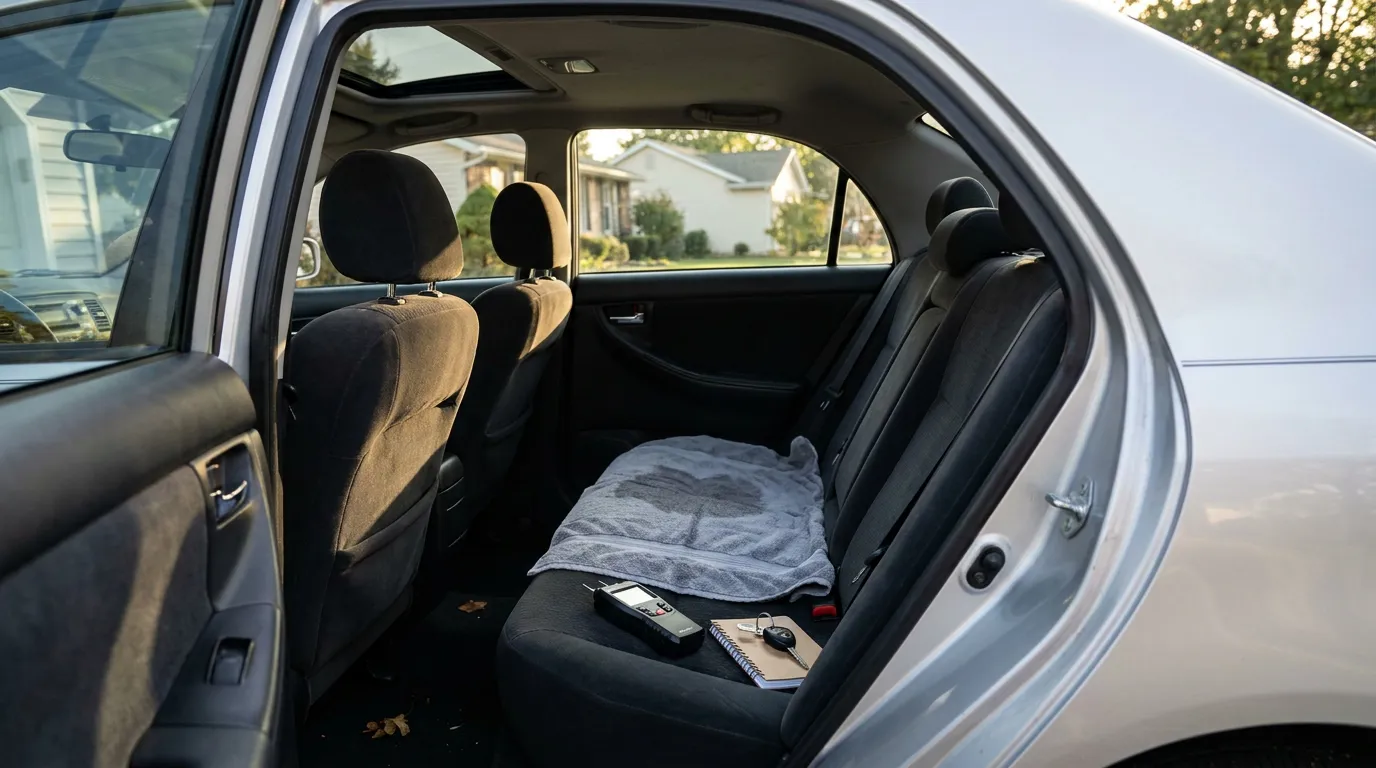
Why a Sunroof Leak Can Be More Than a Cosmetic Annoyance
Lemon laws generally require that a defect substantially impair the use, value, or safety of the vehicle, and that the manufacturer receive a reasonable number of repair attempts before the vehicle may qualify as a "lemon." North Carolina’s New Motor Vehicles Warranties Act, N.C. Gen. Stat. § 20-351 et seq., applies to "nonconformities," defined as any defect that substantially impairs the vehicle’s value to the consumer. The North Carolina Department of Justice describes the law as requiring manufacturers to repair defects affecting a new vehicle’s use, value, or safety within the first 24 months or 24,000 miles, whichever comes first. A sunroof or moonroof leak may meet that threshold when the intrusion is persistent and material rather than a one-time drip; a defect need not make the vehicle undrivable to qualify.
Manufacturers frequently characterize water leaks as minor trim issues. In practice, recurring intrusion can soak carpet and padding, corrode connectors, trigger electrical faults in dome lights or overhead consoles, produce mold and odor, and reduce resale value. Whether a leak rises to substantial impairment is fact-dependent, weighed by severity, frequency, and effect on the vehicle.
The Mechanics Behind Most Roof Water Intrusion
Most sunroof leaks are not caused by the glass panel itself. A sunroof drain defect, clogged or disconnected drain tubes, failed seals, or improperly sealed roof welds are common culprits, and a misrouted drain hose can dump water inside the A-pillar instead of outside the vehicle. Understanding the likely mechanism matters because it helps explain why the same leak may return after multiple "repairs."
Ask the service advisor to note the suspected source on the repair order. When each visit lists a different theory but the same symptom, that history can support the argument that one continuing nonconformity is involved rather than unrelated complaints, a distinction that matters because the four-attempt presumption counts repairs for the same nonconformity.
Building Your Water Leak Lemon Law Claim on Paper
Dealer and manufacturer repair orders are typically the primary evidence in any North Carolina lemon law proof, and your own records generally exist to support them. Document each repair attempt, including dates, mileage, and descriptions of the problem. Gather every invoice, work order, and written communication since the first complaint.
Request repair orders at every visit, even when the dealer performs no work or reports it could not duplicate the concern. A "no problem found" order can still show you presented the vehicle on that date, although whether such a visit counts toward the four-attempt threshold can be disputed. If unsure what to collect, see this overview of the documents needed for a lemon claim.
Helpful items generally include:
- Every repair order and invoice, including "could not duplicate" visits
- Loaner or rental agreements and tow receipts showing days out of service
- Dated photographs and video of wet headliners, water stains, or standing water
- Emails, texts, and app messages with the dealer or manufacturer
- Your purchase or lease agreement and warranty booklet
💡 Pro Tip: Photograph the odometer in the same frame as the water damage. Date-stamped images tied to mileage can help connect your evidence to a specific repair order.
Turning an Intermittent Defect Into Verifiable Evidence
Intermittent defect documentation is often the hardest part of recurring water leak proof, because the vehicle may behave perfectly during a test drive. Record the conditions present each time the leak appears: heavy rain, automatic car wash, parking on an incline, or roof-mounted cargo. Patterns often emerge that a technician may then reproduce deliberately.
Some consumers ask the dealership to perform a documented water test with a hose and note the result on the order. A reproducible test result recorded by the manufacturer’s own authorized facility is generally more persuasive NC lemon law evidence than a consumer description alone, though no single document is required or decisive.
How Repair Attempts and Notice Requirements Fit Together
North Carolina’s statute presumes a reasonable number of repair attempts has occurred once the same nonconformity has been presented for repair four or more times and still exists, or once the vehicle has been out of service for a cumulative total of 20 or more business days during any 12-month period of the warranty. Under N.C. Gen. Stat. § 20-351.5, the days-out-of-service route applies only if the consumer has notified the manufacturer directly in writing of the nonconformity and allowed a reasonable period, not to exceed 15 calendar days, to correct it. That written-notice condition does not apply if the manufacturer failed to disclose the notice requirement clearly and conspicuously in the warranty or owner’s manual, along with the address for sending notice.
Qualifying repair attempts generally must occur within the applicable warranty period and within the first 24 months or 24,000 miles, whichever comes first. The presumption is rebuttable rather than an automatic win, and § 20-351.5(b) expressly allows a consumer to prove substantial impairment other ways even without meeting the four-attempt or 20-day thresholds. These thresholds, the warranty window, and notice mechanics should be verified against the current statutory text and your actual records.
| Evidence Type | Why It Matters | Who Creates It |
|---|---|---|
| Dealer repair orders | Primary proof of each attempt, date, and mileage | Authorized dealer |
| Days-out-of-service records | Supports the alternative statutory presumption | Dealer or rental provider |
| Written notice to manufacturer | Condition of the 20-business-day presumption | Consumer |
| Photos, video, weather notes | Supplements records on intermittent leaks | Consumer |
Arbitration Through the State-Certified Program
BBB AUTO LINE administers North Carolina’s certified Lemon Law dispute resolution program, and its process considers the number of repair attempts made by authorized dealers for the same defect. Consumers filing through the program should gather copies of all repair orders and related documentation before submitting a case. Review how the North Carolina lemon law arbitration program frames nonconformity disputes before deciding on a path.
Arbitration is a separate administrative track from a civil lawsuit, and participation requirements vary by manufacturer. Under N.C. Gen. Stat. § 20-351.7, a consumer generally must first use the manufacturer’s informal dispute settlement procedure if the manufacturer has established one that complies with federal requirements and has clearly disclosed it in the written warranty. Arbitration decisions are generally not binding on the consumer, who may still pursue a civil action, but the outcome may be admissible in court.
Warranty Language, "As Is" Sales, and Other Threshold Issues
Before assuming lemon law protection applies, confirm what warranty actually covers your vehicle. North Carolina recognizes express warranties (specific promises made by a seller or manufacturer) and implied warranties that generally attach automatically unless the vehicle was sold "as is." Guidance on car warranties in North Carolina explains that an "as is" sale generally waives implied warranty protections unless a separate written warranty is provided.
For a moonroof leak claim on a 2020 or newer vehicle still under the original factory warranty, this rarely poses a problem. It may become relevant with certified pre-owned purchases, extended service contracts, and aftermarket sunroof installations, where coverage and responsibility may shift. North Carolina’s Lemon Law itself applies to new vehicles sold or leased in the state; a used purchase may instead implicate warranty claims under the UCC or the federal Magnuson-Moss Warranty Act. Lemon laws also vary by state, so North Carolina’s procedural requirements won’t necessarily match Texas, Ohio, Pennsylvania, or New York.
💡 Pro Tip: Aftermarket roof accessories, roof racks, or prior collision repairs can give a manufacturer an argument that the leak is not a factory nonconformity. Keep records showing the vehicle’s roof is unmodified.
Common Mistakes That Weaken an Otherwise Strong File
Consumers sometimes accept verbal assurances and drive away without paperwork, leaving no record a visit occurred. Others allow long gaps between complaints, which manufacturers may argue signals the leak was resolved. A few attempt independent repairs, inviting disputes about causation and warranty coverage.
One of the most preventable mistakes is waiting. The 24-month/24,000-mile window, the warranty period, and the limitations period for filing suit each run on their own timeline. North Carolina’s Lemon Law does not itself specify a limitations period, so the deadline for a civil action typically depends on which general statute of limitations a court applies, another reason to have the specific facts reviewed early.
Frequently Asked Questions
1. Does a sunroof leak really count as a substantial impairment?
It can, depending on the facts. Whether water intrusion substantially impairs the vehicle’s value is fact-dependent, and documented electrical faults, mold, or repeated loss of use may strengthen the argument. A defect does not have to render the vehicle undrivable to qualify.
2. What if the dealer says it cannot duplicate the leak?
Request the repair order anyway. A "could not duplicate" order can still document that you presented the vehicle on that date, and a pattern of such visits alongside photographic evidence may support proving a recurring defect, though a manufacturer may dispute whether those visits count toward the four-attempt threshold.
3. Can I pursue a claim if my leak was eventually fixed?
Possibly. The statutory presumption for repeat repairs requires that the nonconformity still exist, so a fully repaired defect may fall outside it. Even so, a record of significant days out of service or other warranty damages may support relief under other theories, and outcomes depend heavily on the specific record and applicable statutory conditions.
4. How do days out of service affect my claim?
North Carolina’s presumption recognizes a cumulative total of 20 or more business days out of service during any 12-month warranty period as an alternative to counting repair attempts, subject to the written-notice and 15-day final-repair condition. Loaner agreements and dated service records are the usual way to establish that total.
5. Do my personal notes matter at all?
They may help as supporting material. Your notes, photos, and weather records can contextualize the dealer’s repair orders, but the repair orders themselves generally remain the central evidence in a sunroof leak lemon law NC claim.
Protecting Your Position Before the Warranty Window Closes
A recurring sunroof leak may be provable, but the strength of the claim usually tracks the strength of the paperwork. Consistent complaints described the same way, repair orders collected at every visit, documented mileage and dates, written notice to the manufacturer, and supporting photographs together can create a record that is harder to dismiss as a cosmetic complaint. Because statutory thresholds, warranty coverage, and notice requirements each involve conditions and exceptions, and because the presumption is rebuttable, the outcome of any individual matter depends on its own facts.
If water keeps returning to the inside of your 2020 or newer vehicle, Jeffries Law is available to review your service history and discuss whether your record may support a claim. Reach the team at 877-454-6045, send a message through the free case evaluation form, or read more about the Lemon Law claim process recognized in North Carolina before you decide how to proceed.
Disclaimer: This content is for informational purposes only and is not legal advice. Every case is unique, and results may vary. Consult an attorney about your specific circumstances.