
When Your Car’s Screen Keeps Going Dark: Building a Paper Trail That Holds Up
Key Takeaways: Documenting infotainment screen failures for an Ohio Lemon Law claim starts with dealer-generated repair orders, which are typically the primary evidence and should be requested at every visit, including "no problem found" visits. Support those records with a contemporaneous failure log noting date, time, mileage, what the screen did, which functions were affected, how long it lasted, and weather or start conditions. Video often helps more than photos because it can show duration and behavior, and original files should be preserved and backed up. Keep repair orders, invoices, loaner and rental agreements, the purchase or lease contract, photos, and correspondence in one chronological file, and track days out of service by drop-off and actual pickup dates. A complaint to the Ohio Attorney General’s Consumer Protection Section may create an official record but generally does not replace repair orders or a civil claim. Avoid common mistakes such as accepting verbal fix assurances, describing the defect inconsistently, or discarding paperwork, since the problem generally must arise within Ohio’s protection period of the first year or 18,000 miles, whichever comes first.
A blank, frozen, or rebooting infotainment screen is more than an annoyance in a modern vehicle, since backup cameras, climate controls, driver-assist settings, and phone connectivity often run through that single display. Under Ohio’s Lemon Law, the question is generally whether the defect substantially impairs the use, value, or safety of the vehicle, and whether the manufacturer or dealers received a reasonable number of repair attempts. The strongest files generally pair dealer-generated repair orders with your own organized notes, photos, and video.
If your 2020 or newer vehicle keeps returning to service for the same screen failure, the team at Jeffries Law can review your records and explain your options. Call 877-454-6045 or contact us now to discuss what your documentation may support.
Why Repair Orders Are the Backbone of Your Claim
Dealer and manufacturer repair orders are generally the primary evidence in an Ohio Lemon Law claim, and materials you create at home typically do not substitute for them. These documents are dated, show mileage, and reflect what the technician recorded about the complaint, diagnosis, and correction. Your own notes and video are valuable, but they generally support what the service visit records show.
Ohio’s statutory framework generally requires that a nonconformity reported during the first year or 18,000 miles, whichever comes first, be repaired, and presumes a reasonable number of attempts has been allowed after, for example, three or more attempts on the same nonconformity, eight or more total repair attempts, 30 or more calendar days out of service, or one unsuccessful attempt on a defect likely to cause death or serious injury. These presumptions are fact-specific, and a claim can proceed without one, which makes every documented visit meaningful. A screen problem mentioned verbally but never written onto a repair order may be difficult to count later.
Request a printed or emailed copy of the repair order at the end of every visit, including visits where the technician reports no problem found. "No fault found" entries may still help establish that you presented the vehicle for that concern on that date. Over several visits, a pattern of unresolved complaints can become some of the most persuasive intermittent defect proof available.
💡 Pro Tip: Before you leave the service drive, read the "customer states" line on your repair order. If it does not accurately describe the screen failure you reported, ask the advisor to correct it before check-in.
Documenting Infotainment Touchscreen Defects for a Lemon Law Case
A well-built touchscreen failure log records what happened, when it happened, and what conditions surrounded the failure. Infotainment defects are frequently intermittent and may not reproduce on demand in a service bay. A contemporaneous log may help a technician replicate the issue and help counsel demonstrate frequency over time.
What to Capture Each Time the Screen Fails
Consistency matters more than length. For each event, consider recording:
- The date, approximate time, and odometer reading
- What the screen did, such as going black, freezing, rebooting, or losing touch response
- Whether the backup camera, climate controls, or safety alerts were affected
- How long the malfunction lasted and what, if anything, restored function
- Weather, temperature, and whether the vehicle was cold-started or already warm
These notes are generally most useful when written the same day rather than reconstructed months later. Details like ambient temperature or a recurring failure in reverse gear may point a technician toward a reproducible condition.
Photos and Video That Actually Help
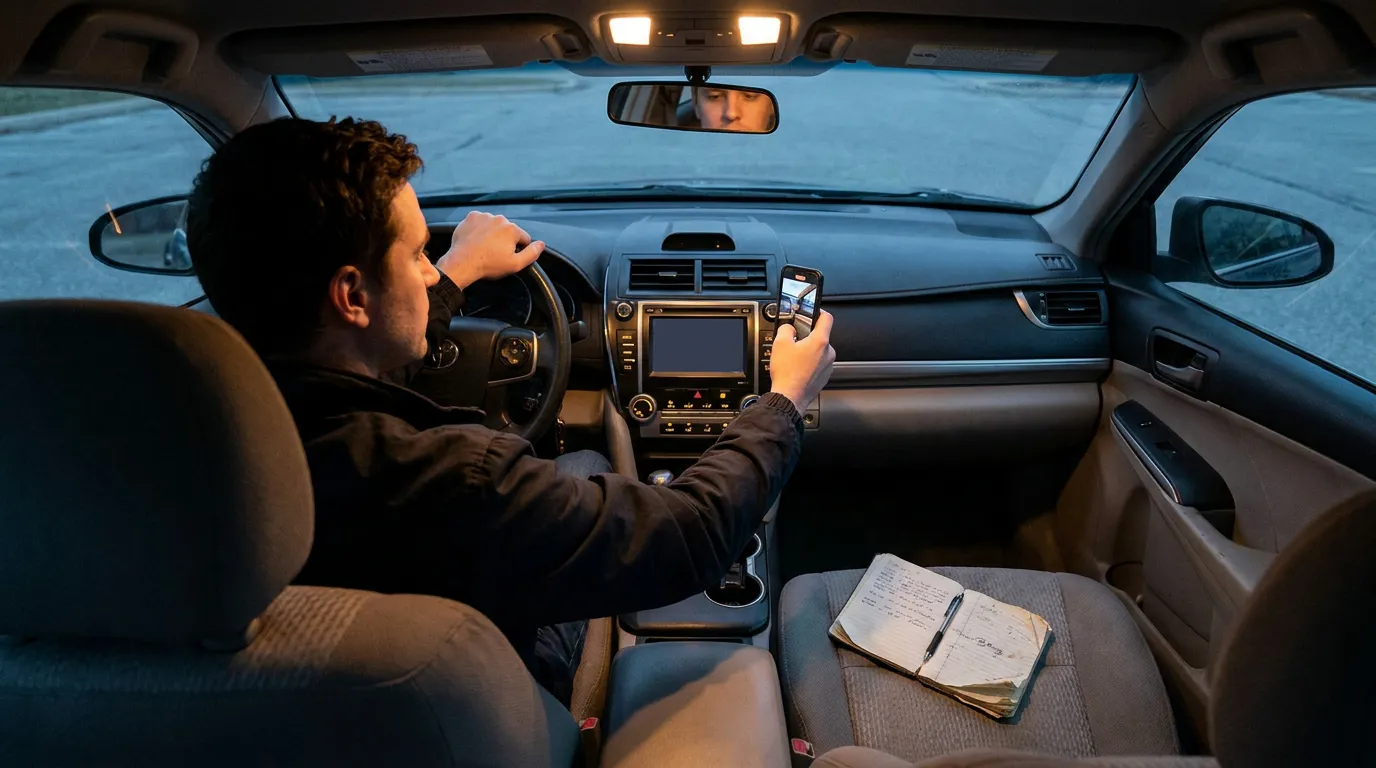
Video generally carries more weight than a still photo because it can show duration and behavior. Record with the vehicle safely parked, capture the screen and, when possible, the odometer or a timestamp in frame. Briefly narrate what you were doing when the failure began.
Keep original files rather than compressed copies sent through messaging apps, and back them up to cloud storage. If a safety-related function such as the rearview camera fails, that footage may be particularly relevant to whether the defect substantially impairs use, value, or safety.
Keeping Written Communications Organized
Ohio consumer guidance consistently recommends keeping copies of all repair orders, invoices, and correspondence with the dealer or manufacturer. Email creates a timestamped record that hallway conversations do not. When a conversation happens by phone, a short follow-up email confirming what was discussed may help preserve the substance of the exchange.
Store everything in one place. A single Ohio vehicle claim file, whether a desktop folder or an accordion file, can help prevent the scramble that often happens when a manufacturer requests records on short notice.
Organizing Your Ohio Lemon Law Paperwork
A clean, chronological file can make it far easier to evaluate whether a claim may meet Ohio’s statutory thresholds. The Cuyahoga County guidance on Ohio’s Lemon Law reinforces that consumers should maintain complete repair documentation throughout the process. Organizing by date, rather than by document type, usually tells the clearest story.
| Document Type | Why It Matters | Where It Comes From |
|---|---|---|
| Repair orders and invoices | May help establish dates, mileage, complaints, and repair attempts | Authorized dealer service department |
| Loaner or rental agreements | Help establish days out of service | Dealer or rental provider |
| Purchase or lease contract | May confirm coverage, in-service date, and warranty terms | Selling dealer or lender |
| Personal failure log | Supplements repair orders and may show frequency | You |
| Photos and video | Illustrate the malfunction between service visits | You |
| Written correspondence | May document notice to the manufacturer | Email, letters, portal messages |
If you are unsure what belongs in the file, this overview of the documents needed to get started walks through the core categories in plain language.
💡 Pro Tip: Photograph your odometer on the day of each service drop-off and pickup. Mileage discrepancies on repair orders are common, and a dated photo can help reconcile the record.
Tracking Days Out of Service
Days out of service may matter independently of the number of repair attempts. Ohio’s framework contemplates that a vehicle out of service for a cumulative total of 30 or more calendar days during the first year or 18,000 miles may support the statutory presumption, though how days are counted can be disputed. Rental and loaner paperwork, shuttle receipts, and dated texts from the service advisor may all help establish those days.
Count carefully and conservatively. Note the drop-off date and the date you actually took possession again, not the date the dealer says the repair was completed. Discrepancies between those dates are common and worth documenting.
Filing a Complaint With State Consumer Protection Authorities
The Ohio Attorney General’s Consumer Protection Section accepts complaints about auto dealers and manufacturers, and submitting one may create an official, tracked record. You can submit a detailed narrative and attach supporting documents through the state’s consumer complaint portal, which generates a complaint record you may reference later. That record may supplement, though generally does not replace, your repair orders and correspondence.
An administrative complaint to a state agency is generally a separate track from a civil lemon law claim against a manufacturer, and filing one typically does not resolve a warranty dispute or extend any applicable deadline. Some manufacturers also maintain informal dispute resolution programs, and under Ohio law a consumer may be required to use a qualifying program before pursuing certain remedies, so participation requirements can vary depending on the warranty terms and facts involved.
Common Documentation Mistakes Consumers Make
Most documentation problems come from small omissions rather than dramatic errors. Consumers frequently accept a verbal assurance that "the software update fixed it" without obtaining paperwork, or they describe the problem differently at each visit so the record may look like several unrelated issues instead of one recurring nonconformity.
Other recurring issues include waiting until the screen fails a fifth time before starting a log, discarding "no problem found" paperwork, and allowing repairs at a non-authorized shop that may not generate warranty repair orders. Describing the same defect in consistent language at every visit generally helps establish that the manufacturer had repeated opportunities to repair one specific condition.
Whether a particular infotainment defect meets the substantial impairment threshold is fact-dependent, and outcomes vary based on the vehicle, the warranty, and the completeness of the record. Courts and manufacturers may weigh safety-related functions differently than convenience features.
Frequently Asked Questions
1. Can an infotainment screen problem really qualify under Ohio’s Lemon Law?
It may, depending on the facts. Ohio’s law addresses defects that substantially impair the use, value, or safety of a new vehicle. A screen failure that disables the backup camera or climate controls may be viewed differently than one affecting radio presets alone.
2. What if the dealer says they cannot reproduce the problem?
This is common with intermittent electronics. Ask that the complaint still be written on the repair order, and provide your dated video and log to the service advisor so it becomes part of the visit record. Repeated unresolved visits may themselves be meaningful.
3. Do my personal notes count as evidence?
They may help support a claim, but repair orders and manufacturer records generally remain the primary evidence. Personal logs, photos, and video generally serve to corroborate frequency and severity between documented service visits.
4. How many repair attempts are required before a vehicle may qualify?
Ohio law generally requires a reasonable number of attempts, and a presumption may apply after three attempts on the same nonconformity, eight total repair attempts, 30 or more days out of service, or a single unsuccessful attempt on a defect likely to cause death or serious injury, when the problem occurs within the first year or 18,000 miles. Whether a given history satisfies that standard depends on the individual facts and is subject to exceptions.
5. Does filing a complaint with the state replace hiring an attorney?
Generally no. An agency complaint may create an administrative record and prompt a response, but it is typically a distinct process from pursuing repurchase, replacement, or monetary relief under the statute.
Putting the Pieces Together Before Deadlines Pass
Strong claims are usually built quietly, one repair order and one dated note at a time. Keep every piece of dealer paperwork, maintain a consistent log of each malfunction, preserve video of the failures, and store it all in one organized file. Because Ohio’s protection period is generally tied to the first year or 18,000 miles, because a separate filing deadline applies to bringing suit, and because eligibility depends heavily on the specific record, it generally helps to have your documentation reviewed sooner rather than later.
If your screen keeps failing and the repairs keep not working, the attorneys at Jeffries Law are recognized for handling consumer warranty matters and can assess whether your file may support a claim. Call 877-454-6045, visit the firm’s lemon law claim page, or request a case review to get started.
Disclaimer: This content is for informational purposes only and is not legal advice. Every case is unique, and results may vary. Consult an attorney about your specific circumstances.